Right Wing Nut House

8/22/2009

YOU COULDN’T PAY ME TO BE A DOCTOR

Filed under: Ethics, Government, Politics, health care reform — Rick Moran @ 10:00 am

It takes anywhere from 11 to 13 years of schooling - including 3-5 years residency - to be able to call yourself a doctor. But as many physicians have pointed out, the process of learning is an on-going effort. Classes, seminars, and fellowships are required over the years so that a doctor can keep current with the breathtaking pace of innovation and increased knowledge.

This is one big reason I never even thought of being a doctor. I have an aversion to book learning, and the prospect of having to go to school until I was in my thirties lit my hair on fire. I find the human body eternally fascinating. But there are limits to curiosity and I have satisfied myself over the years with reading about the incredible breakthroughs and mind bending discoveries that makes the human machine so extraordinary.

Another reason I could never be a doctor is tied up with the debate we are having over health care reform; specifically, the discussion of end of life issues involving treatment and care, and most importantly, who should be involved in those decisions.

The doctors, hospitals, medical ethicists, and review boards that struggle with impossibly complex matters involving morality, religion, and the most intimate and personal desires of the patient, coupled with the pace of scientific progress in medicine that hold out the promise to prolong life, combine to present uniquely painful and wrenching decisions for all of us.

That’s really the bottom line, isn’t it? This is the matter we dance around when talking about “death panels” or “end of life consultation.” I think what we fear most about this isn’t so much that government will force euthanasia down our throats but that “efficiencies” that are forced on government by rising costs will result in a “one size fits all” solutions to problems that are best solved on a case by case basis.

To relieve suffering is the goal of palliative care. Should government - or insurance companies for that matter - force people to accept the end by paying for such end of life care rather than paying for a treatment or procedure that could prolong life but not cure the condition? Let’s imagine the procedure costs $100,000. Should government pay for these treatments when insurance companies won’t?

Sticky, yes? Let’s throw a few other ethical bombs on this scenario. Suppose the patient is 10 years old? Suppose the patient’s age increases the chances for survival but not enough to rationally justify the cost of the treatment? Suppose the treatment will only prolong life for a year or two?

While we’re creating moral problems, let’s try another nightmare scenario. An 60 year old cancer patient with a heart condition has a recurrence of the disease. The cancer can be treated with surgery and chemotherapy. But because of the patient’s heart condition, he won’t live more than a year or so anyway. Without treatment, he will die in six months.

Should Obamacare spend the money to cure the cancer?

These are matters faced by patients, their families, doctors, and hospitals every day. Guidelines in such matters drawn up by government or insurance companies are worse than useless. But in the absence of any good choices, shouldn’t someone be able to make the hard decision and deny payment for experimental, or unproven procedures - or life saving treatment when death from another condition is right around the corner?

Each case is different. Each situation has a human being attached to it, not a slide rule. And I believe this is the fear of old and young alike regarding Obamacare; that in the name of acting for the benefit of the many, government will lose sight of the fact that ultimately, the personal cannot be political in this instance, that there are some things that no government should be able to have a hand in deciding.

The same question can be asked of private insurance companies who would also be inclined to deny the kind of care outlined in both scenarios above. Do we really want those kinds of decisions made based on bottom line medicine?

If I’m confusing you, it’s because there are no good answers. And to my mind, this gives the lie to people who claim that health care is a “right.” Health care is a commodity, bought and sold like any commodity, valued like a commodity, and treated like a commodity by government, insurance companies, and patients alike. True, it is vital to life. But so is food. And I doubt even the most rabid proponent of Obamacare would want to see a government takeover of the food industry.

Every single one of us has already faced these choices or will have to do so someday, whether it affects us, or a close family member. Part of the problem is certainly linked to the miraculous state of medicine today. Our knowledge is growing by leaps and bounds, outpacing our capacity to develop a moral framework to make ethical decisions on life, death and “quality of life.”

Our pitiful attempts to quantify quality of life fall short because in the end, we’re talking about someone else’s life being evaluated based on invented criteria. Even Solomon would have a tough time judging something so intimate and personal. But again, is the current state of our health delivery system so bad that we must empower someone - government or insurance companies - to make these decisions for us? This is the philosophy behind Obamacare and it makes most of us uncomfortable.

I don’t have the answers. I think bringing costs down intelligently should be a priority simply because it’s logical, and because fewer dollars expended per patient would mean more potential dollars to spend on others. There are ways to do this without rationing, or simply paying doctors and hospitals less.

As for the rest, the issues are so complex and fraught with ethical and moral landmines, it would be prudent to make a greater effort to examine what is currently being railroaded through Congress without much thought given to the consequences, so that we can avoid engendering the kind of fear I mentioned above.

It’s been said before by others but bears repeating; Obama is trying to do too much, too fast, and without enough thought given to the real world consequences of what he is trying to accomplish. To claim otherwise is silly. And those fascist, astroturfed mobs of 70-something seniors at health care town halls know it - and fear it.

8/14/2009

PALIN WINS — AND LOSES ME

Filed under: Ethics, Palin, Politics, conservative reform, health care reform — Rick Moran @ 10:03 am

So the Senate, giving in to Palin’s fear mongering, has decided to scrap the end of life consultation provision in the health care bill.

“On the Finance Committee, we are working very hard to avoid unintended consequences by methodically working through the complexities of all of these issues and policy options,” Sen. Chuck Grassley (R-Iowa) said in a statement. “We dropped end-of-life provisions from consideration entirely because of the way they could be misinterpreted and implemented incorrectly.”

The Finance Committee is the only congressional committee not to report out a preliminary healthcare bill before the August congressional recess, but is expected to unveil its proposal shortly after Labor Day.

Grassley said that bill would hold up better compared to proposals crafted in the House, which he asserted were “poorly cobbled together.”

“The bill passed by the House committees is so poorly cobbled together that it will have all kinds of unintended consequences, including making taxpayers fund healthcare subsidies for illegal immigrants,” Grassley said. The veteran Iowa lawmaker said the end-of-life provision in those bills would pay physicians to “advise patients about end-of-life care and rate physician quality of care based on the creation of and adherence to orders for end-of-life care.

Grassley is right about the House bill. There are plenty of slippery slopes that hold the potential for appalling health care policy to emerge once the health bureaucrats got a hold of its broadly drawn and badly written provisions.

But the end of life consultations weren’t one of them. There was no - repeat no mandate to force people to talk to their doctors about DNR’s, living wills, and other crucial, personal, intimate, and private details of what our specific wishes are when we prepare to leave this life behind. Fact check after fact check done by a huge variety of newspapers and websites have thoroughly, completely, and totally debunked Sarah Palin’s cynical fear mongering on the subject.

But it worked anyway. And because of it, it is my belief that Sarah Palin has no business being a national figure in the GOP - nor Guiliani, or any Republican who didn’t have the courage to face the wrath of Palin Zombies and disagree with her. Sarah Palin was wrong. And if she made the “death panel” statement to gin up fear and outrage, then that is the kind of cynical politics I want nothing ever to do with.

If she really believed it, she’s an ignoramus and should stick to being an airhead ex-governor that has conservative little boys drooling over her like they drool over porn actresses and movie stars. If, during the most critical debate on a public policy issue since perhaps the Civil Rights Act of 1964, all she has to offer is an irrational, exaggerated, hyperbolic, and ultimately dishonest critique of the Democrat’s health care plan, responsible Republicans should want to have nothing to do with her.

We needed leadership. She offered fear. We needed a genuine critique of very bad proposals We got fake tears, exploitation of her disabled child in a dishonest cause, and dark hints of the evil our political opponents represent.

Think of the good she could have done if she stuck with the facts. There is - or was - a sizable segment of independent women who admired Palin for her accomplishments. Where are they now? Her lying may have ginned up her base of Zombies who rushed to defend the indefensible but beyond that, she is even losing favor with other Republicans as her positive stands now at 39%, down 7 points since May.

Someone with her visibility could have intervened and called for civil debate based on the facts, denounced people who were shouting down their fellow Americans, and elevated the entire tone of this debate. Instead, she debased herself with her reckless disregard for the facts. And now, an important provision for seniors (one she supported in her own state) that would have had Medicare paying for doctor visits to discuss end of life issues has been sacrificed, largely because she misused her influence to conflate this vital and necessary provision with “death panels.”

Do we realize the irony in all of this? It was 1976 when the country was torn apart by the case of a comatose patient, Karen Ann Quinlan, whose parents sought vainly for months to have her taken off a respirator.

Quinlan was in a persistent vegetative state with no hope of ever coming out of her coma. Despite the parent’s pleas, the doctors and hospital ignored them and kept the young woman on a breathing machine. The legal hullabaloo that resulted was emotionally wrenching, and split the country in two over end of life issues.

At that time, doctors were pretty much Gods who alone could determine what treatments were given to terminally ill or, as in Quinlan’s case, comatose patients with no hope of recovery. In practice, some doctors actually did “pull the plug” but if they were caught, they may have been charged with murder. Clearly, medical technology that could prolong life had advanced beyond our ability to build an ethical and legal framework that would place these decisions in the hands of the patient and the family.

Now that framework is in place and suddenly, we want to prevent seniors and others from exploring these options, one on one with their doctor. This is especially relevant given the fact that too often, doctors are left out of the decision making process altogether and when the time comes, are in the dark about their patient’s wishes.

Many people don’t want to think about these issues but if Terri Schiavo had put it in writing that she didn’t want to live like a vegetable, her family could have been spared a great deal of pain. A living will with that stipulation would have kept the doctors from taking the extraordinary measures they employed to keep her alive. Reason enough for everyone to spend the $45 or so in order to make their own wishes known in a living will so that there is no doubt how medical professionals should treat us if we were to suffer an accident or illness that incapacitated us.

It was a small provision, thought to be uncontroversial - and would have been if we were having an honest debate about health care reform. But we’re not. And thanks to Sarah Palin, who might have changed at least some of that from our side, we’re not going to have one anytime soon.

I’ve said it a thousand times; this bill is so bad that if we spent the same amount of time explaining the truth of it as we do in lying about it, it will be soundly defeated. A good leader, a true conservative lives for the truth. Sarah Palin flunked the test on both counts and deserves to be cast into the outer darkness of politics reserved for those who misuse the public trust she so cynically, and cavalierly abused.

7/25/2009

A FEW RAMBLING THOUGHTS ON THE GATES AFFAIR

Filed under: Blogging, Ethics, Politics — Rick Moran @ 10:05 am

I have a long article coming out tomorrow in Pajamas Media on the Gates matter that will look at why everyone in that little drama acted the way they did. It is my belief that in some ways, we are programmed to respond in racial situations and that it’s like that because we just can’t bring ourselves to really talk about race in a way that would start to change the dynamics between the races.

Case in point; Ta-Nehisi Coates at the Atlantic:

I feel pretty stupid for going hard on this, and stupider for defending what Obama won’t really defend himself. I should have left it at one post. Evidently Obama, Crowley and Gates are talking about getting a beer together. I hope they have a grand old time.

The rest of us are left with a country where, by all appearances, officers are well within their rights to arrest you for sassing them. Which is where we started. I can’t explain why, but this is the sort of thing that makes you reflect on your own precarious citizenship. I mean, the end of all of this scares the hell out of me.

Coates is troubled by the attitude of his fellow citizens:

When we think about the cops, it’s scary, on one level, to conclude that a cop can basically arrest you on a whim. It’s scarier still to think that this is what Americans want, that this country is as we’ve made it. And then finally it’s even scarier to understand that no president can change that. It’s not why he’s there. He is there to pass health-reform–not make us post-racist, or post-police power, or post-whatever. Only the people can do that. And they don’t seem particularly inclined. Here is what the election of Barack Obama says about race–white people, in general, are willing to hire a black guy for the ultimate job. That’s a big step. But it isn’t any more than what it says.

Coates, a very smart, very reasoned liberal who happens to be African American. His attitude toward the police has been influenced, then, by living as a black man in America and all that implies when it comes to his experience in dealing with what historically has been the heavy handed oppression of police directed against African American males.

Is Coates programmed by his experience and by society to respond in this way? I think so - just as Gates, Crowley, and Obama were all programmed to respond the way they did.

The fact that Coates sees the American people as giving the police the green light to harass African Americans is also a programmed response. I would agree that the American people don’t seem inclined to challenge the racial divide in this country but only one who has experienced oppression first hand could lay the blame for that on some nebulous attitude on the part of citizens that arresting people “on a whim” is good and then try and connect that attitude to carrying a concealed firearm. The two issues have nothing to do with each other - unless you’ve seen the dark underbelly of racism first hand and can imagine worse.

From my PJM article:

The facts of the case are a fascinating example of how race divides America. Police, as authority figures, have a notorious history in African American communities — sometimes deserved, sometimes not. It appears from unimpeachable eyewitness accounts that in this case, despite Sgt. Crowley being an expert in how to avoid racial profiling and diversity training, the perception on the part of Professor Gates was that he was being singled out for being black.

Of course, Gates had no idea that Officer Crowley had such a stellar reputation or possessed such tolerant credentials. All he knew was his experience as a black man in America and his assumption that if he had been white, the police would not have asked for his ID.

We’ll never know if that assumption was correct. Just as we’ll never know if the anonymous woman who called the police after seeing Gates try to break into his own home would have done so if she had glimpsed a white man trying to do the same thing. We can assume the best or the worst from all involved and, within the context of our flawed understanding of each other, assure ourselves that we are correct.

The point being, all the actors in this little drama have their perception of the incident colored by what divides us. The actions of everyone were programmed by the rules under which we currently interact as white and black Americans. Gates felt his dignity attacked — an anathema to whites who can’t understand how he could fail to appreciate the police looking after his property. For his part, one might wonder how much more patient Crowley could have or should have been with Gates before arresting him. No doubt he acted professionally. But even with someone as evenhanded as Crowley apparently is, the nagging suspicion that if Gates had been white he would have somehow been treated differently is hard for many to shake. That is the trap that history has set for us and is one from which we refuse to release ourselves.

The president has been forced to backtrack so precipitously for his “stupid cops” comment that he is tripping over his Democratic friends on the Hill who are backtracking on health care reform. He is putting a bandaid on the cut by doing what we do best when confronted with our racial divide in such stark, and open terms; he is finessing the situation by setting up this little Kabuki play with Gates, Crowley, and him sitting down like drinking buddies and tossing down a few beers at the White House.

Left unsaid, as always, will be the real things that divide the races. But that’s the way it has always been in America - even with an African American as president.

7/12/2009

PROSECUTING TORTURE AS A DISTRACTION FROM THE ECONOMY

Filed under: Ethics, Government, History, Homeland Security, Politics — Rick Moran @ 9:21 am

When the “Torture Memos” were released a couple of months ago, President Obama took what I thought was the correct course; acknowledge the episode in our history, condemn it, pledge that it won’t happen again, and move on into the future:

This is a time for reflection, not retribution. I respect the strong views and emotions that these issues evoke. We have been through a dark and painful chapter in our history. But at a time of great challenges and disturbing disunity, nothing will be gained by spending our time and energy laying blame for the past. Our national greatness is embedded in America’s ability to right its course in concert with our core values, and to move forward with confidence.

I still believe this is exactly the correct course of action, albeit with one caveat; investigate this “painful chapter in our history” so we can discover how this happened.

It is obvious to any rational, thinking, fair minded individual that the Bush Administration did not undertake this torture regime lightly, nor did they carry it out for self-aggrandizing purposes, nor did they believe they were in the wrong. Their motives were to protect the country - as it turns out, at too high a cost. They were not looking for political advantage. They were looking for information.

There is a dispute over whether they got anything of value from their illegal actions, but using hindsight to judge the torture regime purely on efficacious grounds is nonsense. In their view, they had to try. That was the whole point of what even they acknowledged several times was shaky legal activity.

I don’t happen to think it was that close of a call legally but others have made some cogent arguments that the Bush administration did indeed walk a fine legal line. I reject those arguments as sophistry because they are given “after the fact” as justification for actions already taken. There were enough lawyers in the Bush Justice Department who knew better and protested prior to the illegal torture that there should be little doubt that the fig leaf of legality supplied by Yoo and others was inadequate to the situation.

Surely, there must be some kind of investigation into how the Bushies arrived at the decision that what they were doing wasn’t torture despite ample evidence that it was. Their overriding argument appears to be that “it really didn’t hurt that much” because they took precautions (such as limiting the time a prisoner would be forced to undergo waterboarding) and that the pain they inflicted left few marks and healed in a matter of days.

Once the psychological barrier against torture was broken, it appears that things got out of control from there. So yes, let’s investigate. But prosecute?

Attorney General Eric H. Holder Jr. is leaning toward appointing a criminal prosecutor to investigate whether CIA personnel tortured terrorism suspects after Sept. 11, 2001, setting the stage for a conflict with administration officials who would prefer the issues remain in the past, according to three sources familiar with his thinking.

Naming a prosecutor to probe alleged abuses during the darkest period in the Bush era would run counter to President Obama’s oft-repeated desire to be “looking forward and not backwards.” Top political aides have expressed concern that such an investigation might spawn partisan debates that could overtake Obama’s ambitious legislative agenda.

The White House successfully resisted efforts by congressional Democrats to establish a “truth and reconciliation” panel. But fresh disclosures have continued to emerge about detainee mistreatment, including a secret CIA watchdog report, recently reviewed by Holder, highlighting several episodes that could be likened to torture.

Holder’s decision could come within weeks, around the same time the Justice Department releases an ethics report about Bush lawyers who drafted memos supporting harsh interrogation practices, the sources said. The legal documents spell out in sometimes painstaking detail how interrogators were allowed to subject detainees to simulated drowning, sleep deprivation, wall slamming and confinement in small, dark spaces.

Prosecutions would no doubt please some on the left who want a pound of flesh from Bush administration officials. But is the administration really that keen on reigning in Holder and preventing him from looking at this “dark chapter in our history?”

Methinks the Obama administration doth protest too much. A distraction like this is just what the doctor ordered to take people’s minds off the fact that the stim bill isn’t working, that there is a growing call from Obama’s left flank for a second stimulus measure, that his cap and trade bill is in big trouble in the senate, and that it is far from certain that his his health care plan will come out the way he wants - with a public option that will be paid for without taxing the middle class.

Rallying his base to the cause of prosecuting Bush administration officials for torture will also take their minds off how he has betrayed them on a host of issues from gay rights to his agreement to indefinite detentions of terrorists.

So might this unleashing of Holder on Bush era torture crimes be nothing more than a distraction from the woeful economy that is resisting the president’s importunings to improve? Obama wouldn’t be the first president to use the tactic and he wouldn’t be the last if that is his game.

A good old fashioned investigation with strategic leaks and the spectacle of Bushies marching into the Justice Department to testify would serve as excellent bait for the media who no doubt would go overboard in their coverage of the hated Bush administration’s torture policies.

Bread and circuses worked for the Roman pro-consuls who used the spectacles to distract a populace constantly on the verge of starvation.

Why not Obama?

7/2/2009

A WORD ABOUT PUBLIC VIRTUE

Filed under: Ethics — Rick Moran @ 11:08 am

That public virtue, which among the ancients was denominated patriotism, is derived from a strong sense of our own interest in the preservation and prosperity of the free government of which we are members. Edward Gibbon:

Much has been written about Governor Mark Sanford’s extramarital affair and I won’t add to it here except to say that his transgression against his marriage got me to thinking about public and private virtue.

The world has changed since America’s founding and the idea that we couldn’t be free without a civic minded citizenry that embraced public virtues and held their leaders to standards of public behavior that insured they were acting in the interests of the people and not selfishly. Back then, modesty, simplicity, probity, prudence, and self-abnegation were pre-requisites for political office. The model of a good republican was George Washington whose impossible adherence to these and other virtues made him an object of near worship to the generation who fought the revolution and wrote the Constitution.

But Washington was hardly perfect, although he tried to be while keeping one eye on history and the other on his “reputation.” He tended his public virtue as a gardener lovingly tends beloved roses, taking extreme, almost obsessive care that his public actions reflected the carefully crafted public image he had worked so hard to create. (This obsessiveness led him to destroy much of his personal correspondence with his wife before his death lest history find him a hypocrite.)

It would be grossly unfair to compare today’s politicians with Washington. But the public virtues he nurtured are as important to the idea of maintaining a republican government today as they were then.

Where have they gone?

It is not a modern phenomenon, this loss of public virtue in our political leaders. The degrading of public morals has been a long, slow, slide rather than a precipitous fall. But today, very few public servants actually “serve” the public, preferring to dust off their public virtues every two, four, or six years and parade them before the people around election time, as if the true nature of their cynical misappropriation of the public trust never happened.

We have seen greed, avarice, a lust for power and influence beyond reason, and the greatest sin of all - enriching oneself at the expense of the people - become more and more common. Congress votes itself more perks, more ways to separate themselves from their constituents until we get Barbara Boxer sternly informing a general testifying before her committee to address her by her “title” - senator - and not “ma’am” as the general was referring to her. The fact that a public servant would even consider the idea that she had been given a title says much about the attitude of our political leaders toward public virtue and civic-mindedness.

Sanford did not transgress against any public virtues by playing around on his wife. But how much separation is there really between public and private morality? Heather McDonald doesn’t think there is much of a connection at all:

For I otherwise don’t believe that there is a close connection between public and private virtue. New York Mayor Rudolph Giuliani was an execrable father and husband but a transformative mayor, who understood as a gut matter some fundamental principles about the public realm and the responsibilities of citizens towards each other. Not all our Founding Fathers were paragons of fidelity. Bill Clinton’s ability to nudge the Democratic agenda towards a modest repudiation of the welfare state was untouched by his irrelevant womanizing. Sanford’s initial stance on the stimulus package was a valuable one, and it is amusing to see the media left seize on his marital transgressions to discredit it yet again.

[...]

Sanford did make his private life a matter of public concern, however, by his self-involved failure to secure the chain of command during his disappearance.

I would disagree with McDonald on the basis of private virtue — keeping sacred one’s promise to be faithful - as being reflective of and relevant to a politician’s basic trustworthiness. Clinton’s private peccadilloes directly led to his public transgression of lying to a grand jury. Whether that was impeachable is still being debated. But he was disbarred because of it and suffered the ignominy of having the House vote out articles of impeachment.

As far as Giuliani, right or wrong, he lost votes because of his messy personal life. Voters made the connection between public and private virtue even if McDonald doesn’t believe they should. And I suspect voters in South Carolina are making that same connection today.

If a politician swindles his business partner in the private sector, should we ignore that because of the public virtues he touts during his election campaign? People will draw their own conclusions and vote accordingly.

I would argue that not only has private virtue been undermined by our materialistic, hedonistic society but that public virtue has suffered the same fate. The cynicism is incredible. Nobody believes politicians act in the public interest anymore and why should they? They don’t. They don’t even pretend anymore. William Jefferson’s $90,000 in a freezer and Duke Cunningham’s written list of amounts it would take to buy his earmark are symptomatic of an attitude on the part of our politicians that is rending the fabric of our republic and destroying the idea of free, representative government.

Benjamin Franklin said, “Only a virtuous people are capable of freedom. As nations become corrupt and vicious, they have more need of masters.”

We get the government we deserve. And not demanding our politicians adhere to simple, republican virtues in their public life may have already ruined the dreams of the Founders beyond repair.

6/13/2009

WHAT DO WE DO ABOUT ‘APRIL’S MOM?’

Filed under: Blogging, Ethics, Government, Politics — Rick Moran @ 5:17 am

Courtesy of Hot Air, this is an eyebrow raising story of a blogger who achieved a modicum of success after blogging about her terminally ill unborn child. She carried the baby to term only to see the child die a few hours after delivering at home.

It’s a heart tugging story that captivated a good slice of the Right to Life Movement as well as others who got caught up in the drama. At it’s peak, “April’s Mom” writing at the blog “Sharing the story of Today” was getting 100,00 visitors a week.

The eyebrow raising part of this story is that it was a hoax:

The woman behind the hoax isn’t “April’s Mom” — a single expectant mother who lay awake at night terrified her unborn child would die at any time, according to the Chicago Tribune.

She is actually Beccah Beushausen, a 26-year-old social worker from the Chicago suburb of Mokenka who says she didn’t know how to free herself from the web of lies she wove.

“Soon I was getting 100,000 hits a week, and it just got out of hand,” she told the Tribune. “I didn’t know how to stop. … One lie led to another.”

The blog reached its peak at nearly a million hits when Beushausen wrote that baby April Rose was born alive at home — and then died mere hours later, the paper reported.

Anti-abortion supporters were captivated by her story, logging on each night to read about her plight and saying they were praying for her.

Some followers even sent gifts and photographs to the post office box she listed online. Parenting Web sites that oppose abortion promoted her site.

[...]

“I know what I did was wrong,” Beushausen told the Tribune. “I’ve been getting hate mail. I’m sorry because people were so emotionally involved.”

There’s no evidence that Beushausen profited financially from the hoax or committed a crime.

(Note to Fox fact checkers: The suburb is “Mokena, IL.”)

The hoax was discovered when Beushausen posted a picture of her “baby” which was immediately recognized by a dollmaker who had the exact same doll in her collection.

And the idea that she did not “profit financially” from her hoax is absurd. Her site is covered with ads. The advertisers who took out those ads were paying based on traffic - traffic generated by a hoax. And if they were paying by the number of clickthroughs, that amount of money would also have been influenced by the deception.

I am not a lawyer but receiving money under false pretenses should be against the law if it isn’t already. Do we still prosecute snake oil salesmen?

It is unfortunate that the victims of this hoax - the pro-life community who sought validation for their cherished beliefs - should have been played in such a shameful way. The fact is, there are stories that, while not quite as dramatic as Beushausen’s lie, nevertheless serve as an example of people whose moral commitment to the unborn is so profound that they knowingly carry babies to term who suffer from disease or malformation that will make raising them an enormous challenge.

As a pro-choice conservative, I can admire that kind of personal commitment to a moral code. And even though I have a less than expansive view of Sarah Palin’s talents as a politician, I admire her choice to knowingly bring a Down Syndrome child into the world. I was shocked by the reaction by some on the left - especially some feminists - to the Palin family’s choice. Evidently, there are “choices,” and there are leftist choices. But calling yourself “pro-choice” and living up to that credo was apparently too difficult for some who mercilessly criticized Palin for not aborting her baby once it was clear the child would be born with Down Syndrome.

Whither then Ms. Beushausen? The Chicago Tribune gives us some clues about her motivation:

Beushausen said she really did lose a son shortly after birth in 2005. She started her blog in March to help deal with that loss and to express her strong anti-abortion views, she said.

She had expected only a handful of friends to read it, but when her first post got 50 comments, she was hooked.

“I’ve always liked writing. It was addictive to find out I had a voice that people wanted to hear,” Beushausen said.

“Soon I was getting 100,000 hits a week, and it just got out of hand,” she said. “I didn’t know how to stop. … One lie led to another.”

A good friend from college was unknowingly drawn into the drama and offered this:

“When I heard that she was pregnant, I called her and said if she needed anything, I was there for her,” said Myers, who lives in Nashville. She said she spoke to Beushausen almost every day for the last few weeks.

Myers sold T-shirts online to benefit Beushausen and PASS, a Tinley Park crisis pregnancy clinic that Beushausen asked the couple to donate to. The couple said they also sent her a few hundred dollars.

Even after learning of the hoax, Myers said she and her husband don’t regret their involvement.

“She’s someone who needed love and attention, and we gave her that,” Myers said.

Her father confirmed that the stress of hiding the hoax got to her and she spent a couple of days in a local hospital. No mention is made of what she was being treated for but an educated guess would be she was on a suicide watch. Her dad adds, “She’s a very talented young lady who hit some hot buttons,” he said. “She knows she made a big mistake.”

I reject the notion there is any political lesson to be learned from this incident. There will be those who will seek to denigrate the pro life movement because one of their own was temporarily successful in playing to their most heartfelt beliefs. Can’t imagine what angle they would use but I’m sure they will come up with something appropriately inane. And I don’t believe that pro-lifers need be defensive about anything. Blogs have built-in credibility now, and while there have been some of these hoaxes exposed over the years, blog audiences are a trusting lot - as well they should be.

But blog audiences have also become much more discriminating over the years when it comes to “original reporting” by websites. Much less is taken for granted today than 4 or 5 years ago. This is a result, no doubt, of several cases where bogus information was passed along as truth. Having been burned, most blog readers are much more discerning in what they believe and what it takes to convince them.

But Beushausen was writing on a small mommy blog and relating her supposedly personal story. None of the skepticism that would attend a political or celebrity story was present. The idea that someone would lie about something as serious as a terminally ill baby just never entered into most people’s minds. Anyone who would do such a thing would be (and I love this word) a female cad.

And that’s what Beushausen is. She is a bounder, a blackguard, a heel. Shamelessly playing with the emotions of her readers, - for profit or not - she has damaged the credibility of all bloggers by her actions.

The quicker we forget about Beushausen, the better. Let her slide back into a well deserved anonymity while taking note that perhaps, we won’t be quite so easy to fool next time.

UPDATE AND CORRECTION

It appears this woman is really something of a fabulist - a pathological liar of sorts.

Via Blue Crab Boulevard, it appears that Beushausen, identified in the story as a “social worker,” is no such thing:

In response to a June 12 article in the Chicago Tribune and a related Associated Press story about “April’s Mom”, http://www.chicagotribune.com/news/local/chi-baby-hoax-12jun12,0,5601624.story, the National Association of Social Workers has confirmed that the troubled young woman who created a huge online following with a fictitious account of her pregnancy IS NOT A SOCIAL WORKER. According to sources at the NASW Illinois Chapter, Beccah Beushausen is not licensed in the State of Illinois as a social worker and is not a member of the National Association of Social Workers.

Maybe “she” is actually a “he” or perhaps that rigmarole about losing a baby is also a fib. I think it wise at this point to assume everything that has been written about this person is a lie on her part until we find someone who has the straight dope.

6/7/2009

THE OUTING OF PUBLIUS AND THE COMFORT OF ANONYMITY

Filed under: Blogging, Ethics, Government, IMMIGRATION REFORM, Israel vs. Hamas — Rick Moran @ 9:45 am

Someday, someone is going to make a million by writing a book on what so far is largely unwritten; the rules and etiquette of blogging.

When that happens, we won’t have internet ignorant philistines like Ed Whelan running around destroying the anonymity of bloggers who choose to remain unknown. Or maybe we will, if they prove as unable to control their anger as Mr. Whelan has demonstrated.

Whelan, a legal writer of some repute whose stuff has appeared just about everywhere one would expect from a brilliant legal mind, but is perhaps best known for writing Bench Memos at NRO, became annoyed with Publius of Obsidian Wings for some of the cracks the blogger made about Whelan’s analysis of Sotomayer’s remarks about judicial policy making.

Responding point by point to Publius’s piquing of Whelan’s demonstrably thin skin, the President of the Ethics and Public Policy Center couldn’t leave it at that. Instead, he decided to act rather unethically and dig unto Publius’s personal life in order to discover who this mosquito nibbling on his backside might be.

Sounding for all the world as if he had solved the mystery of Area 51, Whelan wrote triumphantly:

I’ve been reliably informed that publius is in fact the pseudonym of law professor John F. Blevins of the South Texas College of Law. I e-mailed Blevins to ask him to confirm or deny that he is publius, and I copied the e-mail to the separate e-mail address, under the pseudonym “Edward Winkleman,” that publius used to respond to my initial private complaints about his reckless blogging. In response, I received from “Edward Winkleman” an e-mail stating that he is “not commenting on [his] identity” and that he writes under a pseudonym “[f]or a variety of private, family, and professional reasons.” I’m guessing that those reasons include that friends, family members, and his professional colleagues would be surprised by the poor quality and substance of his blogging.

I am very happy Ed has enjoyed his Captain Queeg moment and solved the mystery of the missing strawberries. Such sleuthing no doubt builds up an appetite to which Whelan might consider eating the plate of slightly overdone crow that is sitting in front of him.

And since Publius’s opinion differs from Whelan’s on Sotomayor’s beliefs regarding judicial activism, the only obvious explanation for his anonymity is that he is trying to keep his family and colleagues in the dark about the “poor quality and substance of his blogging.”

Could it be something else? Publius explains:

As I told Ed (to no avail), I have blogged under a pseudonym largely for private and professional reasons. Professionally, I’ve heard that pre-tenure blogging (particularly on politics) can cause problems. And before that, I was a lawyer with real clients. I also believe that the classroom should be as nonpolitical as possible – and I don’t want conservative students to feel uncomfortable before they take a single class based on my posts. So I don’t tell them about this blog. Also, I write and research on telecom policy – and I consider blogging and academic research separate endeavors. This, frankly, is a hobby.

Privately, I don’t write under my own name for family reasons. I’m from a conservative Southern family – and there are certain family members who I’d prefer not to know about this blog (thanks Ed). Also, I have family members who are well known in my home state who have had political jobs with Republicans, and I don’t want my posts to jeopardize anything for them (thanks again).

All of these things I would have told Ed, if he had asked. Instead, I told him that I have family and professional reasons for not publishing under my own name, and he wrote back and called me an “idiot” and a “coward.”

Whelan obviously doesn’t get out much. Or read the news. He is certainly an ignoramus about blogging if he hasn’t read about the dozens of cases of people who have lost jobs, been stalked and threatened, or forced to give up writing by employers all due to their passion for blogging.

My own case is instructive, although not for the reasons cited above. For the first 7 months this blog was in existence, I used the nom de blog” Superhawk” as a handle. The reasons was simple; being the brother of a national journalist known to most in the blogging community, I wanted to establish myself as a writer/blogger before coming out. I had always intended to write under my own name eventually. But I wanted to assure myself - quite understandably, I believe - that any success I enjoyed was due to my own efforts.

The irony, as it turned out, was that my own brother outed me on the Hugh Hewitt Show. He did it at almost the exact moment I was thinking of coming out of the anonymity closet anyway so it actually worked out pretty well.

The point is, there are a lot of good reasons for bloggers to remain anonymous and Ed Whalen has no right to decide differently just because he got steamed about someone’s response to his analysis. Did Publius commit a crime? Was he slandering Whalen? If not, Whalen’s fit of personal pique looks low, tawdry, childish, and vengeful. The closest Publius got to getting personal with Whelan was in calling him a “know-nothing demagogue.” And this was after making the point that Whelan knew better and was simply pandering to conservative sensibilities.

Holy Jesus, Ed. I’ve got pretty thin skin myself but it would take a helluva lot more than that to set me off. Questioning my integrity will do the trick as will trying to tell me what to write on my own site. And if you plan on commenting on this or any other post without reading what I’ve written and instead, substitute what you think I wrote or make the same points I made in the post and try and convince me I didn’t make them, you might as well be prepared for some skin flaying because that is my number one pet peeve.

But a “know-nothing demagogue?” In the rarefied atmosphere you inhabit at NRO and other elite bastions of opinion, them’s might be fightin’ words, but in the blogosphere, that’s almost a compliment. To point out that almost any blogger has experienced much, much worse (and dished it out accordingly) would be to mention the obvious to anyone who has spent more than an hour reading blogs.

So, through Whelan’s towering ignorance, he has outed someone for no good reason save his own sense of payback with still unknown consequences to a man he doesn’t know, who never did him any personal harm, and couldn’t affect his reputation one way or another even if that was his intent.

Yeah - way to go Ed.

The question of anonymity of bloggers is, I think, something to be settled by each individual blogger for the reasons I gave above. But what about anonymous commenters? Should they be granted the same comforting cloak that a blogging pseudonym brings?

There are so many sneering, snarky, ignorant, racist-bigots-haters out there in Blog Commentville - many more proportionately than actual bloggers - that I find it disgusting that these reprobates don’t have the guts to use their real names when chastising me or anyone else. If they want anonymity, they should start their own blogs. Their poison is spread to a far wider audience than they deserve as they glom onto sites with large traffic and where like minded anonymous trolls gather to cheer on each other’s putrid rants.

Even in the free wheeling atmosphere that blogs inhabit, if one were to attack fellow bloggers using the language and insults hurled by these anonymous commenters, they would never get the kind of attention they get on larger blogs. Hence, many bloggers are contemplating outlawing anonymous commenters altogether. Most publishing platforms today give the blogger the option of forcing their readers to register if they wish to comment, the registration being activated only when a link to a valid email address is sent.

While this stops the most rabid of trolls, it can’t stop anonymous commenters from fouling a site. The only option for the blogger is to ban the IP and name of the transgressor - a sometimes fruitless exercise as it is relatively easy to establish a new IP, get a new email address, and change one’s handle. In the end, one has the choice of banning comments altogether or simply deleting the objectionable ones.

If Publius had been a commenter at some blog attacking Whelan personally, or spreading lies about him, or simply calling him names, I would not be very sympathetic. But the blogger - one of the few left of center bloggers I find reasonable and thoughtful - gave what most bloggers would consider a mild rebuke to Whelan’s analysis and was outed for his trouble.

I would recommend that Mr. Whelan familiarize himself with blogs and the nature of the beast before going off half cocked and making himself appear a vengeful, spiteful, small minded man. I lost far more respect for Whelan through his outing of Hilzoy than anything the blogger has written about him.

What does that tell you, Mr. Whelan?

EMBARRASSING UPDATE

I stupidly wrote “Hilzoy” was the blogger outed when the actual victim was “Publius.” No excuse, just carelessness.

6/3/2009

CONOR FRIEDERSDORF AND HIS ABOMINABLE STRAWMEN

Filed under: Blogging, Ethics, Government, History, Politics, The Rick Moran Show, War on Terror — Rick Moran @ 10:24 am

1-1
Conor Friedersdorf receiving some words of wisdom from one of his many strawmen.

A few days ago when the Levin/Dreher/Friedersdorf war was waging at various points around the internet, I wanted to weigh in on it to defend Conor Friedersdorf from charges by some that he was just some youthful lightweight whose attacks on Levin for suggesting a woman’s husband put a gun to his head for being married to such a dolt were misguided and ignorant of the “context” found on conservative talk radio.

After reading this piece at The American Scene by Mr. Friedersdorf, I’m glad I didn’t.

I have given up trying to understand why conservatives place such importance on what comes out of the mouths of pop righties like Levin whose shtick, while entertaining, is taken far too seriously by way too many. Fine. Color me a old fuddy duddy but it used to be conservatives were perfectly able to find inspiration and guidance from genuine thinkers or even thoughtful politicians. I suppose every mass movement needs its popularizers and celebrities these days (I recall the guff astronomer Carl Sagan endured from his colleagues for trying to make extraordinarily complex concepts accessible to minds less scientifically inclined - like mine). But really now, must we elevate to hero status people whose claim to fame is that they can savage the opposition in more colorful and amusing ways than some other shock jock?

Yes, yes, I know that Rush, Levin, and the rest do more than simply make liberals look like idiots, and even dangerous idiots at times. They also dispense conservative wisdom - or, at least what their adoring fans believe is wisdom. Mark me down as unimpressed with most of these shock jocks forays into the realm of conservative ideas. Listening to Limbaugh sometimes reminds me of my best friend John when I was in high school who didn’t read Moby Dick, or The Red Badge of Courage, or any of the classics assigned in literature class but instead bought the comic book version, usually on the morning of the test. Needless to say, he passed the exam but lost out on the richness of Melville’s prose and Crane’s towering anger at the waste of war.

I like a good verbal slap at liberals as much as the next conservative but why must it degenerate into the kind of crude vulgarities used by Levin et al? In the race for ratings, the more inventive the invective, the more friendly that Arbitron meter becomes, I guess.

At any rate, I agreed with Friedersdorf that Levin stepped over the line and should have been smacked down for it. But when a young man like Friedersdorf comes up with a shockingly ill conceived post like this one on “terror hawks” and how Obama could use the same excuses used by Bush to start going after anti-abortion activists, I am glad my support for his arguments against Levin was never put in a post.

This piece has a double dose of straw men, a generous dollop of reductio ad absurdom argumentation, with a heaping pile of manure for desert.

First, what’s with this?

The attack on Dr. Tiller is widely referred to as “terrorism” in the blogosphere. Agree or not, it is easy to image an ongoing terrorist campaign run by fringe pro-lifers to shut down abortion clinics. Heaven forbid that this recent murder is followed by bombings at a few Planned Parenthood locations, but that scenario isn’t unthinkable — copycat atrocities are a sad fact of modern life.

“Easy to image” an “ongoing terrorist campaign” carried out by fanatical pro lifers in a scenario that “isn’t unthinkable? No, it’s not easy to imagine and barely thinkable (Dismissing the possibility entirely cannot be done but “easy to imagine” it is not.) In fact, one would have to deliberately ignore history to imagine anything of the sort. Such acts of murder by unbalanced fanatics have been blessedly rare and have never come in the kind of terrorist wave attack Friedersdorf posits above. The self evident reason is that abortion providers are on high alert after such a terrorist act as are clinics, making further atrocities nearly impossible.

But someone must have put a burr up Mr. Friedersdorf’s behind for him to go off like this:

Should something like that come to pass, I wonder how “War on Terror hawks” would react. My admittedly flawed term is meant to reference folks who believe the executive branch possesses broad unchecked powers to combat terrorism, including the designation of American citizens as enemy combatants, the indefinite detention of terror suspects, wiretapping phones without warrants, “enhanced interrogation techniques,” and other powers initially claimed by the Bush Administration and its defenders. Would these predominantly conservative officials, commentators and writers be comfortable if President Obama declared two or three extremist pro-lifers as “enemy combatants”? Should Pres. Obama have the prerogative to order the waterboarding of these uncharged, untried detainees? Should he be able to listen in on phone conversations originating from evangelical churches where suspected abortion extremists hang out? The answer is probably that different “War on Terror hawks” — anyone have a better term for this? — would react differently, but as a matter of law, it seems to me that if they’d gotten their way during the Bush Administration, President Obama would have the power to take all those steps and more, a prospect that is terrifying to me, not because I think our Commander in Chief is looking for a pretext to round up innocent pro-lifers, but because it doesn’t take many violent attacks before Americans start clamoring for a strong executive response, a dynamic that tends to erode liberties in previously unthinkable ways and spawn mistakes whereby innocents are made to suffer.

First of all, take a breath, my friend. My eyes are turning red just from reading that last sentence.

I must congratulate Mr. Friedersdorf on setting up such a fine strawman. Obama holding pro-life activists as “enemy combatants” sure is dramatic but really now, the odds of that happening fall somewhere between my becoming starting right fielder for the Chicago Cubs and the moon careening out of orbit and hitting the earth before I finish writing this sentence. Still here? Good.

So the idea that “terror hawk” commentators would be faced with such a question has as much chance of occurring as me being elected Governor of Illinois - especially since I am a nominal Republican and, while I wouldn’t mind a little harmless graft now and again, the crooks and rogues who inhabit the sewer of Illinois politics are major leaguers compared to anyone else.

It is a ridiculous argument to make, this idea that any president would come down on anti-abortion fanatics like that. Ditto waterboarding pro life activists (Why??). And Mr. Friedersdorf is naive indeed if he doesn’t believe the FBI isn’t already listening in on what these activists are up to - even if the connection leads to a church. The Bureau no doubt has a handle on most, if not all of the fanatics and probably have a good idea which ones are a threat and which are mostly talk.

Friedersdorf is also probably off base with his contention that a wave of terrorist attacks on clinics would cause an outcry by Americans for a “strong executive response.” No doubt pro-choice activists would quite understandably be yelping for the civil liberties of activists but would the average American, who would be in little danger from such attacks, make the kind of stink about internal security that our politicians made in the aftermath of 9/11?

Mr. Friedersdorf’s arguments are based on the notion that there is equivalence between a terrorist attack carried out by trained cadres hell bent on killing as many of us as possible and, historically speaking, lone wackos or small groups of untrained fanatics attacking small targets that — again, historically - have resulted in a small loss of life. I don’t see the equivalence or much need to worry that Obama or any president - even if Mr. Friedersorf’s terror wave scenario came true - would carry out the draconian measures that President Bush felt necessary to impose in the aftermath of 9/11.

I would be in agreement with Conor if he had stuck to the notion that another terrorist attack that was equally or more devastating than 9/11 would almost certainly lead to additional curtailments of our liberties. I hate to contemplate the notion of what the aftermath of a WMD attack would entail and what impact it would have on our freedoms. But Friedersdorf is trying to make a point about the danger of right wing religious nuts being equal to that of the jihadists - not only as a threat but that tactics used to fight the jihadists would be used to violate the civil liberties of anti-abortion fanatics That dog don’t hunt.

One point Conor makes I agree with; supporting torture techniques like waterboarding is wrong. As for the rest, I have been troubled by some of the Bush-era policies like FISA violations and and some of the more eyebrow raising strictures in the Patriot Act like removing safeguards on FBI warrants. But I am also not a civil liberties absolutist and recognize that the exigencies of war sometimes calls for a curtailment of some liberty. That has historically been the case and to have denied the president the same powers granted every president since Washington would have been wrong.

If I were Conor Friedersdorf, I would pick another analogy to make his point about “terror hawks” than the fringe fanatics of the anti-abortion movement.

5/24/2009

‘THINK I AM GONE AND WAIT FOR THEE, FOR WE SHALL MEET AGAIN…’

Filed under: Ethics, General — Rick Moran @ 9:21 am

1-1

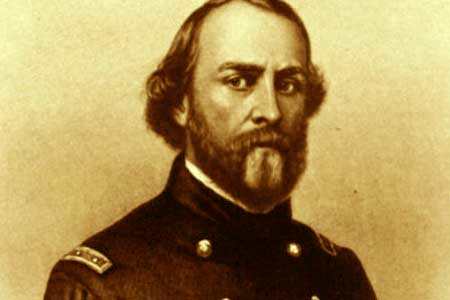
Sullivan Ballou, taken a few weeks before he died in battle.

This blog post originally appeared on May 28, 2007

A week before the battle of Bull Run Sullivan Ballou, a Major in the 2nd Rhode Island Volunteers, wrote home to his wife in Smithfield. The letter, made famous on Ken Burn’s landmark documentary Civil War, should really be read while listening to the haunting Ashokan Farewell that accompanied the reading on the show. Such timeless love and heartfelt patriotism makes this letter so American in form and meaning that it should not only move you to tears but make you proud of your heritage.

Such men as this fought to save the union. And they fight to save us today.

My very dear Sarah:

The indications are very strong that we shall move in a few days—perhaps tomorrow. Lest I should not be able to write again, I feel impelled to write a few lines that may fall under your eye when I shall be no more . . .

I have no misgivings about, or lack of confidence in the cause in which I am engaged, and my courage does not halt or falter. I know how strongly American Civilization now leans on the triumph of the Government and how great a debt we owe to those who went before us through the blood and sufferings of the Revolution. And I am willing - perfectly willing - to lay down all my joys in this life, to help maintain this Government, and to pay that debt . . .

Sarah my love for you is deathless, it seems to bind me with mighty cables that nothing but Omnipotence could break; and yet my love of Country comes over me like a strong wind and bears me unresistibly on with all these chains to the battle field.

The memories of the blissful moments I have spent with you come creeping over me, and I feel most gratified to God and to you that I have enjoyed them for so long. And hard it is for me to give them up and burn to ashes the hopes of future years, when, God willing, we might still have lived and loved together, and seen our sons grown up to honorable manhood, around us. I have, I know, but few and small claims upon Divine Providence, but something whispers to me - perhaps it is the wafted prayer of my little Edgar, that I shall return to my loved ones unharmed. If I do not my dear Sarah, never forget how much I love you, and when my last breath escapes me on the battle field, it will whisper your name. Forgive my many faults and the many pains I have caused you. How thoughtless and foolish I have often times been! How gladly would I wash out with my tears every little spot upon your happiness . . .

But, O Sarah! If the dead can come back to this earth and flit unseen around those they loved, I shall always be near you; in the gladdest days and in the darkest nights . . . always, always, and if there be a soft breeze upon your cheek, it shall be my breath, as the cool air fans your throbbing temple, it shall be my spirit passing by. Sarah do not mourn me dead; think I am gone and wait for thee, for we shall meet again . . .

Sullivan Ballou was killed a week later at the first Battle of Bull Run, July 21, 1861.

4/28/2009

THE MORAL PARAMETERS OF TORTURE

Filed under: Blogging, Ethics, Government, History, Middle East, Politics, Torture — Rick Moran @ 10:51 am

There are few of us who haven’t made up their minds about whether torture is immoral, illegal, or both/neither. But wherever you come down on this issue, good arguments and thoughtful writing should never be ignored or dismissed out of hand simply because you disagree with it. In fact, I find that reading opposing viewpoints - when they are argued rationally and with a minimum of bombast - help clarify my own thinking and sometimes, even alter my position on an issue.

Not this time. But Commentary’s Peter Wehner has a great piece that tries to set some moral parameters for torture that are well argued and well written. Such clear thinking - even though I believe him wrong - should be commended given all the crap that has been sloughed off as “commentary” on both sides of this issue.

I can appreciate Wehner’s struggle to understand the moral universe he inhabits and seek exceptions and clarifications to the idea of using torture. The problem as I see it is he has adopted the “ticking bomb” scenario that has been thoroughly debunked by people much more knowledgeable than I about terrorism. And there is a troubling detachment on Peter’s part that disconnects what many of us consider the absolute moral wrong of torture as he seeks wiggle room in a kind of moral relativism that I don’t think he would ordinarily embrace.

Wehner’s attempts to “define down” what is torture and what isn’t misses the point that what was done was illegal. Can a moral good (or morally neutral) action be found in breaking the law? It can if, as Wehner attempts to do, you twist the ends/means argument into a pretzel. He also brings up the straw man argument about some of our military going through the SERE program (that I dealt with here) as well as the fact that others have endured it so, he reasons, it can’t be all that bad.

Finally, Wehner employs the argument that because torture “worked,” this should be taken into account when judging the morality of its use during the Bush administration.

To begin, allow me to quote extensively from a Daniel Larison post as he responds to a piece by Jim Manzi who asks, “[W]hy is the belief that the torture of captured combatants is wrong compatible with anything other than some form of pacifism? I mean this an actual question, not as a passive-aggressive assertion.”

Larison swallows hard and lets him have it:

One of the things that has kept me from saying much over the last week or so is my sheer amazement that there are people who seriously pose such questions and expect to be answered with something other than expressions of bafflement and moral horror. Something else that has kept me from writing much on this recently is the profoundly dispiriting realization (really, it is just a reminder) that it is torture and aggressive war that today’s mainstream right will go to the wall to defend, while any and every other view can be negotiated, debated, compromised or abandoned. I have started doubting whether people who are openly pro-torture or engaged in the sophistry of Manzi’s post are part of the same moral universe as I am, and I have wondered whether there is even a point in contesting such torture apologia as if they were reasonable arguments deserving of real consideration. Such fundamental assumptions at the core of our civilization should not have to be re-stated or justified anew, and the fact that they have to be is evidence of how deeply corrupted our political life has become, but if such basic norms are not reinforced it seems clear that they will be leeched away over time.

[snip]

mplicit in Manzi’s entire post is the rejection of any distinction between combatant and non-combatant, which tells me that he either doesn’t understand or doesn’t accept the concept of limited war. For him, unless one is a pacifist, one must endorse total war. In such a view, there would be nothing immoral about the summary execution or cruel and inhumane treatment of POWs, since the latter would have been targeted for death while they were still combatants. After all, if torturing such prisoners is not immoral, as Manzi seems to say it is not, what could possibly be wrong with killing them? That is where one must ultimately end up once the distinctions between combatant and non-combatant are erased or blurred, and it is the barbaric conclusion one will eventually reach if one does not start from the assumption that war itself is a sometimes-necessary evil and that it is morally justifiable only under specific circumstances and within certain limits. One of those limits is that captured combatants are to be treated humanely, and when we go down the road towards easing those restrictions we taint not only the institutions responsible for national security with crimes but we also abandon any real claim to moral integrity.

Larison’s argument might be viewed as the absolutist view of torture. I might disagree with the extent he worries about the corrupting nature of torture but there is no dismissing the line in the sand he has drawn - a line I accept for practical, rational, and moral reasons as well.

Wehner? Not so much:

Critics of enhanced interrogation techniques have taken to saying that Americans don’t torture, period – meaning in this instance that we do not engage in coercive interrogation techniques ranging from sleep deprivation to prolonged loud noise and/or bright lights to waterboarding. Anyone who holds the opposite view is a moral cretin and guilty of “arrant inhumanity.” Or so the argument goes.

Methinks Peter listens too much to liberal bomb throwers and besides, this is a gross oversimplification and something of a straw man. But to continue:

But this posture begins to come apart under examination. For one thing, the issue of “torture” itself needs to be put in a moral context and on a moral continuum. Waterboarding is a very nasty technique for sure – but it is considerably different (particularly in the manner administered by the CIA) than, say, mutilation with electric drills, rape, splitting knees, or forcing a terrorist to watch his children suffer and die in order to try to elicit information from him.

The question Peter leaves unanswered is whether it is legal or illegal? How can you make a moral judgment about torture — and defining down what is torture is irrelevant to whether it meets the definition under the law — without taking into consideration the moral imperative to obey the law? Wehner is pouring quicksand and doesn’t realize the ground is shifting beneath his feet.

I certainly wouldn’t want to undergo waterboarding – but while a very harsh technique, it is one that was applied in part because it would do far less damage to a person than other techniques. It is also surely relevant that waterboarding was not used randomly and promiscuously, but rather on three known terrorists. And of the thousands of unlawful combatants captured by the U.S., fewer than 100 were detained and questioned in the CIA program, according to Michael Hayden, President Bush’s last CIA director, and former Attorney General Michael Mukasey – and of those, fewer than one-third were subjected to any of the techniques discussed in the memos on enhanced interrogation.

“Far less damage” as opposed to electrodes and thumbscrews but again, it avoids what Wehner apparently doesn’t want to face; the fact that the civilized world has proscribed the practice in words of unmistakable clarity — unless you are seeking a moral “out” and wish to begin to parse pain and suffering.

US law, the Geneva Accords, and the UN Convention Against Torture all use language that clearly makes the physical and psychological pain of waterboarding a form of torture. The fact that our servicemen are not being held as prisoners and therefore not subject to the law’s protections as well as being volunteers who fully realize the nature of the exercise makes Wehner’s use of the SERE argument nothing more than a strawman set up to excuse torture.

Wehner’s thesis really goes off the rails when he tries to imply that moral relativeness, when evaluating torture, should be employed to blur the ends/means distinction. He dubiously invokes Senator Charles Schumer’s thoughts during a Congressional hearing on torture back in 2004 where the New York lawmaker invokes the “ticking bomb” scenario as one exception to torture. Here’s Schumer:

Take the hypothetical: if we knew that there was a nuclear bomb hidden in an American city and we believe that some kind of torture, fairly severe maybe, would give us a chance of finding that bomb before it went off, my guess is most Americans and most Senators, maybe all, would do what you have to do. So it’s easy to sit back in the armchair and say that torture can never be used. But when you’re in the fox hole, it’s a very different deal.

Wehner eagerly embraces the hypothetical and runs with it:

Apropos of Schumer’s comments, critics of enhanced interrogation techniques need to wrestle with a set of questions they like to avoid: if you knew using waterboarding against a known terrorist may well elicit information that would stop a massive attack on an American city, would you still insist it never be used? Do you oppose the use of waterboarding if it would save a thousand innocent lives? Ten thousand? A hundred thousand? What exactly is the point, if any, at which you believe waterboarding might be justified? I simply don’t accept that those who answer “never” are taking a morally superior stand to those who answer “sometimes, in extremely rare circumstances and in very limited cases.”

First, it is an absolute impossibility to know that “using waterboarding against a known terrorist may well elicit information” that could prevent an attack. That is sophistry on a stick. We might also “know” that pulling his fingernails out might get him to talk if waterboarding doesn’t work. And we wouldn’t know, for instance, whether this particular terrorist had been specifically trained to resist waterboarding or other forms of torture - at least long enough to fail in our efforts to stop a “ticking bomb” attack.

The whole ticking bomb scenario needs to be dumped by torture defenders. It does their argument no good to posit a hypothetical that is more the product of fantasy than possibility.

A good debunking of the ticking bomb myth can be found in an article published in Public Affairs Quarterly last year by Jamie Mayerfield, associate professor of political science at the University of Washington:

Among the many unrealistic elements of the ticking bomb hypothetical, I give
particular attention to the exaggerated degree of certainty attributed to our belief in the prisoner’s guilt. In the scenario we are fully certain that the individual in our custody has launched an attack on civilians and is now withholding the information needed to save the civilians’ lives. Such certainty is unrealistic. Any realistic approximation of the ticking bomb scenario creates too high a risk that an innocent person will be tortured.

The made-to-order features of the ticking bomb scenario blind us to torture’s
reality. In the real world, torture “yields poor information, sweeps up many innocents, degrades organizational capabilities, and destroys interrogators.”7 Consider the problem of false information, which not only causes delays, swallows man hours, and leads down blind alleys, but can also encourage disastrous choices.

Below I discuss how the Bush administration used false information extracted
under torture to help justify the Iraq war. In this case, torture did not save lives, but helped bring about a great many deaths. Torture also inflames enemies, alienates friends, and scares away informants. And it spreads.

These dangers, purged from the ticking bomb hypothetical, are inseparable from actual torture. Yet public attention is consumed by the hypothetical. Obsession with the better-than-best case scenario warps our thinking about torture. We overlook torture’s dangers and exaggerate its effectiveness. By now, the ticking bomb narrative has acquired its own momentum, but fear and anger do much to keep it aloft.

Mayerfield’s point is well taken; because the ticking bomb scenario has not only permeated our culture through fictional variations found in TV, novels, and films, but also because it has been eagerly embraced by many torture apologists, it has become a rote defense even though there has never in history been a situation that remotely resembles it. Mayerfield, like Larison above, may exaggerate the dangers of torture to America’s soul but that doesn’t obviate his point that justifying torture in one, limited case can open the door to its use in other scenarios as well.

So the answer to Peter’s question regarding whether torture condemners would use waterboarding if it could save “a thousand innocent lives? Ten thousand? A hundred thousand?” is irrelevant because its impossible to answer a hypothetical that doesn’t exist except on TV and in film.

And Mayerfield’s point about torture being hugely unreliable is spot on as well. I don’t buy the flat statement that torture doesn’t work, or never works. It wouldn’t have been in use for thousands of years unless it did. The problem with it is its unreliability as a means to accurate information. Those thousands of lives Peter wishes to save by waterboarding a terrorist wouldn’t be worth spit if the bomber lied under torture about everything.

The fact that we simply couldn’t be sure means but would have to act as if the terrorist was telling the truth. Suppose while the authorities were off on a wild goose chase the bomb went off and killed those thousands of innocents? That nice moral house of cards torture defenders have built up would collapse in a heap. Is bad information better than no information at all — or good information that might have been extracted using interrogation techniques other than torture?

Wehner answers this argument by trying to make the case that the good information we extracted via torture saved lives and therefore, the ends justifies the means because saving so many innocents is an absolute moral good in and of itself. It is a strange argument considering Peter’s moral waffling earlier in his piece.

On the substantive level, there is the question of the efficacy of enhanced interrogation techniques. There is an intense debate surrounding this matter, but we can certainly say that respected members of the intelligence world insist that innocent Americans are today alive because we employed a set of coercive interrogation techniques. According to Hayden and Mukasey, “As late as 2006, fully half of the government’s knowledge about the structure and activities of Al Qaeda came from those interrogations.” Former CIA Director George Tenet said, “I know that this program has saved lives. I know we’ve disrupted plots. I know this program alone is worth more than [what] the FBI, the [CIA], and the National Security Agency put together have been able to tell us.” And former National Intelligence Director Mike McConnell has said, “We have people walking around in this country that are alive today because this process happened.”

I will ignore the dubious employment of authority by Peter of people who may go on trial for crimes related to what they are defending and only point out what Peter himself admits later:

It seems unlikely that asking a jihadist his surname, first name and rank, date of birth, army, regimental, personal or serial number, or failing this, equivalent information – which is what the Geneva Conventions say ought to apply to prisoners of war but not, historically, to unlawful enemy combatants – would elicit as much information as coercive interrogation techniques. Dennis Blair, Obama’s national intelligence director, admitted to his staff that “high value information came from interrogations in which those methods were used and provided a deeper understanding” of al Qaeda. (Once Blair’s memo was revealed, he added this caveat: “There is no way of knowing whether the same information could have been obtained through other means.”

Why does Wehner concoct this strawman of “name, rank, and serial number?” Professional interrogators are masters of putting psychological pressure on a subject without coercive or “enhanced” interrogation techniques. It is a gross simplification to make it appear that the “either/or” options open to an interrogator would be polite banter about al-Qaeda or waterboarding.

But the key here is Blair’s statement that there was “no way of knowing” whether the exact same information could have been obtained through legal interrogation methods. The reason is because they weren’t tried or, more likely, the interrogation regime that involves non-torture wasn’t given much of a chance to work. (See this Heather McDonald piece in City Journal from 2004 where she details the initial, successful efforts of army interrogators who used psychological pressures on prisoners, walking up to the line but never crossing it.)

Thus, the interrogators who used torture became victims of their own success, leaping for the opportunity to employ torture as a short cut when such methods were unnecessary or, at the very least, non-coercive interrogations were given short shrift.

Finally, Wehner tries to excuse and justify torture because we’re at war and moral choices are hard:

There are of course serious-minded critics of enhanced interrogation techniques. But to pretend, as some critics do, that the morality of this issue is self-evident and that waterboarding and other coercive interrogation techniques are obviously unacceptable and something for which our nation should be ashamed is, in my judgment, not only wrong but irresponsible. When a nation is engaged in war, you hope to find in government sober people who are able to weigh competing moral goods and who take seriously their obligation to protect our nation. They may not get everything right at the time – hardly anyone does in the heat of the moment – but they should not have to face a lynch mob years after the fact (especially those in the lynch mob who blessed the activities at the time they were being used). The American public, one hopes, can see through all this. And as Nancy Pelosi might well discover, playing a role in inciting a mob can come at a cost.

“Competing moral goods?” That’s a new one when discussing torture. But here is where Peter and I agree - at least I am moving toward his position that the law is not a concrete edifice with only form and substance. What of justice? What of mitigating circumstances? Unlike the revenge seekers and out and out Bush haters, I grant the administration the benefit of their good intentions in a very difficult and morally ambiguous universe. I think they made the wrong choices - horribly wrong - but recognize that some allowance must be made when the awesome responsibilities under which those men and women were working is thrown into the mix.

It doesn’t excuse their actions. It won’t “lessen their time in purgatory” as we used to half-jokingly use as a catch-all for arguments about ethics and morals with our Viatorian teachers back in the day.

But perhaps, it should keep them out of the dock. And out of jail.

« Older PostsNewer Posts »

Powered by WordPress