Right Wing Nut House

4/26/2009

IT’S SILLY TO BLAME A POROUS BORDER FOR SWINE FLU IN US

Yes, silly.

I’ve blogged for years about the spread of contagious diseases from around the world into the U.S. as a result of uncontrolled immigration. We’ve heard for years from reckless open-borders ideologues who continue to insist there’s nothing to worry about. And we’ve heard for years that calling any attention to the dangers of allowing untold numbers of people to pass across our borders and through our other ports of entry without proper medical screening - as required of every legal visitor/immigrant to this country - is RAAAACIST.

9/11 didn’t convince the open-borders zealots to put down their race cards and confront reality.

Maybe the threat of their sons or daughters contracting a deadly virus spread from south of the border to their Manhattan prep schools will.

I am as strong a supporter of guarding our borders and dramatically reducing illegal immigration as anyone but the attempt to hijack the Swine Flu story and portray it as a question of too many illegal immigrants coming into America spreading disease is so far off base as to be a laughable exaggeration.

The Chinese are fanatical about closing their borders and yet SARS became a huge problem for them. Disease doesn’t know about walls or barbed wire. Viruses don’t care if you have 100,000 soldiers guarding your border. If Swine Flu does become widespread, the overwhelming majority of people will catch it as a result of contact with an American citizen.

Even the beginnings of the spread of Swine Flu in the US cannot be traced to illegal immigrants. The kids in New York who contracted what appears to be a mild form of the disease got it in Mexico after a recent trip.  The Texas and California cases were also mild and still something of a mystery because none of the infected people were anywhere near pigs and hadn’t been to Mexico. As the CDC narrows its search to find “Patient Zero,” it is likely that individual would have recently been exposed to the bug  in Mexico.

But even if the original infection came from an illegal immigrant,  it is not reasonable to assume that if we had only closed the borders, we would have been any safer whatsoever. Millions of Mexicans have entered the US perfectly legally since the outbreak began and it a dead certainty that any serious spread of the disease would occur in this group rather than the tiny number of cases that could be attributed to illegals.

Adequate border protection will go a long way to preventing another terrorist attack. It will help relieve the burden on our schools, health clinics, and other social services from illegals who leech from the taxpayers after breaking the law to get here.

But to believe that closing the border to illegals  will have any effect on the spread or even containment of Swine Flu is refuted by the facts. It is estimated that anywhere between 500,000 and one million illegals pour across our border every year. Almost the same number - about 650,000 -  enter the US legally every day.

Let’s not bring unrelated issues into the discussion of Swine Flu.

UPDATE: HEY KIDS! LET’S BLAME AGRI-BUSINESS!

This is not only sillier than trying to drag illegal immigrants into the mix, it is dangerous rumor mongering as well:

Is Smithfield Foods, the world’s largest pork packer and hog producer, linked to the outbreak? Smithfield operates massive hog-raising operations Perote, Mexico, in the state of Vera Cruz, where the outbreak originated. The operations, grouped under a Smithfield subsidiary called Granjas Carrol, raise 950,000 hogs per year, according to the company Web site-a level nearly equal to Smithfield’s total U.S. hog production.

On Friday, the U.S. disease-tracking blog Biosurveillance published a timeline of the outbreak containing this nugget, dated April 6 (major tip of the hat to Paula Hay, who alerted me to the Smithfield link on the Comfood listserv and has written about it on her blog, Peak Oil Entrepreneur):

Residents [of Perote] believed the outbreak had been caused by contamination from pig breeding farms located in the area. They believed that the farms, operated by Granjas Carroll, polluted the atmosphere and local water bodies, which in turn led to the disease outbreak. According to residents, the company denied responsibility for the outbreak and attributed the cases to “flu.” However, a municipal health official stated that preliminary investigations indicated that the disease vector was a type of fly that reproduces in pig waste and that the outbreak was linked to the pig farms. It was unclear whether health officials had identified a suspected pathogen responsible for this outbreak.

From what I can tell, the possible link to Smithfield has not been reported in the U.S. press. Searches of Google News and the websites of the New York Times, Washington Post, and Wall Street Journal all came up empty. The link is being made in the Mexican media, however. “Granjas Carroll, causa de epidemia en La Gloria,” declared a headline in the Vera Cruz-based paper La Marcha. No need to translate that, except to point out that La Gloria is the village where the outbreak seems to have started. Judging from the article, Mexican authorities treat hog CAFOs with just as much if not more indulgence than their peers north of the border, to the detriment of surrounding communities and the general public health.

To sum up, a couple of newspapers and a couple of blogs have tried to make the connection between the evil Smithfield and a Swine Flu outbreak  and that swarms of flies feeding on the apparently untreated fecal matter is the way the disease spreads - at least how it began to spread.

I guess we can call the WHO and tell them to stop the investigation, that we’ve found the cause and the culprit. Aside from being incredibly irresponsible, I would think that the scientists at WHO and the Mexican health agency IMSS might want to look into it before rumor mongering newspapers and ignorant bloggers start spreading false information.

No explanation forthcoming as to how the disease mutated from one that spread through fly bites to one that apparently spreads human to human (no one is sure yet how the bug spreads). Neither is there an explanation for how these flies were able to travel hundreds of miles to infect others. But that doesn’t stop irresponsible journalists and bloggers from just making sh*t up as they go along.

We’re going to see a lot of this.

4/20/2009

NOT A MISPRINT: OBAMA SEEKS CUTS OF 100 MILLION TO CURB DEFICIT

Filed under: Ethics, Government, Politics — Rick Moran @ 11:43 am

If this were April 1, I might be inclined to think it a media joke. Or that the White House press office is pulling our leg.

But it is not and it makes me worry for the sanity of President Obama that he could actually believe that cutting  1/3,700 of the federal budget will make a dent in the $1.75 (at least) TRILLION debt he’s running up this year.

And the way the Obamapress is reporting this is hysterically funny - as if he is actually trying to cut the deficit. Here’s one of the major Obama rags in the country, the LA Times:

President Obama, whose healthcare and economic stimulus initiatives threaten to dramatically inflate the federal budget deficit, heralded a new push Saturday to cut wasteful spending in Washington.The president said that in coming weeks he would announce the elimination of “dozens of government programs.” And he said he would ask his Cabinet secretaries on Monday for specific proposals to slash their departments’ budgets, promising there would be “no sacred cows and no pet projects.”

The president singled out a move by Homeland Security Secretary Janet Napolitano to end consulting contracts to create seals and logos that he said had cost the department $3 million since 2003.

In case you are unaware, it wouldn’t surprise me if DHS spends $3 million on exercise bikes for higher grade bureaucrats. They may spend that much on Kleenex for DHS offices. Hell, they might spend $3 mill on Napolitano’s dog biscuits - for her dog, of course.

And by the way, just what the hell was DHS doing spending millions of dollars on logos anyway? I know everyone in America wants a DHS T-shirt ’cause they’re so kewl but can’t they settle for a coffee mug with the Homeland Security seal on it?

Economist Greg Mankiw can’t believe it either:

To put those numbers in perspective, imagine that the head of a household with annual spending of $100,000 called everyone in the family together to deal with a $34,000 budget shortfall. How much would he or she announce that spending had be cut? By $3 over the course of the year–approximately the cost of one latte at Starbucks. The other $33,997? We can put that on the family credit card and worry about it next year.

Is the president that out of touch that he doesn’t know there are far riper trees to prune if he wants to go after government waste? The Pentagon always has a lot of bloat as do entitlement programs. Don’t need a pair of pruning shears there, an ax will do just fine. Just keep hacking away until someone starts screaming - and then hack some more.

And aren’t you proud of our president who is seeking to eliminate “dozens of programs” from the budget?  There may be thousands of programs that could safely be eliminated from corporate welfare to to some of the grants that are going to groups like ACORN, Operation PUSH, and other stick-up operations. Either Obama doesn’t have much of an imagination or he is making all the jokes about liberals never being able to cut the budget for fear of offending an interest group. To be sure, the American Society of Logo and Seal Designers will no doubt be up in arms over the DHS cuts. But then, they didn’t contribute to his campaign so Obama could care less what they think.

Energy, Transportation, HHS, Commerce, Education - the whole jiggling, fat laden, porky pig of a budget could stand a once over by those Department secretaries. Instead, what will be cut won’t even count as being superficial. More like a bad PR joke or Obama’s idea of responsible government - which, when you think about it, is pretty much the same thing.

Talking trillions and cutting billions would at least be in the ballpark. But saving $100 million dollars out of a budget of $3.6 trillion is a slap in the face to the taxpayer - a cynical public relations blitz. I hope it is not indicative of the way the president will approach deficit cutting in the future.

At the rate he’s going, the sun will burn out before the deficit is reduced to a manageable level.

4/18/2009

THE CONSERVATIVE CASE FOR GAY MARRIAGE

Filed under: Ethics, Politics — Rick Moran @ 9:16 am

I don’t care about gay marriage as a political issue. If I had my druthers, it would have the same importance as one’s position on whether to make tomorrow “National Convenience Store Clerk Day.” No doubt Hallmark will have a card for it if it comes to pass.

It may have been efficacious to defend “traditional marriage” 40 years ago but I don’t see the point today. You see, I live in sin with my Zsu-Zsu and neither one of us cares who knows it or what they think about it. Cohabitation destroyed “traditional marriage” long before gay marriage even became an issue. There is no stigma attached to living together in an unmarried state. Indeed, very few people care — and if you do, go to hell. To make it your business — to judge me on how I live my life is about as intrusive as anyone can get. Needless to say, the thought of government having a say in whether we can cohabitate should be as abhorrent to a conservative as any other government intervention in our private lives.

Given that my lover and I have been together longer than many marriages last, one is tempted to ask if marriage as the “foundation of community and society” can even claim that mantle any longer. And don’t talk to me about “the children.” The number of divorces every year of marriages with children (more than a million kids a year) speaks to the seriousness American adults take the important task of raising children in a stable, loving home. “Blended families” are the norm not the exception. More than half the kids born today will grow up in a home where the parents get at least one divorce.

Of course, there are legal issues regarding marriage vs. cohabitation but even those are fast disappearing. Partner rights have been granted for everything from hospital visits to legal wills in most states. Many states extend those legal benefits to gay couples. American society is changing and the question confronting conservatives is do we live in the past, hoping that the Ozzie and Harriet marriage template makes a comeback or do we face the future and try and “conserve” the good that comes from the traditional family structure while trying to protect children from the often deleterious effects of marital strife and break ups?

A tall order, that. But first things first and that means accepting the fact that American society has moved on — culturally as well as legally — from traditionally defined “marriage” and has embraced different ways people choose to live and love. If you choose marriage as a life long commitment, more power to you. That is your choice and in all sincerity, I wish you the best of luck and a long, loving partnership. I, and most others, envy you your commitment and desire to beat the odds.

That’s because at bottom, when you take away all the legalisms, the moral quotient, the religious implications, and the needs of society, what we are left with is nothing more than how people choose to define their relationships where they feel love for another human being. To many, it is important to them in a religious sense that this relationship be a lifelong marriage/partnership with children as a symbol of their love and commitment to one another. This is one legitimate choice. It will always be a choice and it is hard to see how anything - even allowing gay marriage - will take that choice away from you or even invalidate that choice in the eyes of society.

I have heard no argument compelling enough or logical enough that would cause me to fear for the future of “traditional marriage” if that is what people choose as a way to express their love and commitment to one another. The secular conservative case against gay marriage is sometimes based on the notion that marriage as a civil compact is an expression of the importance that society places on the nuclear family and as a practical matter, encourages procreation so that society can survive. Introducing gay marriage undermines this goal and places society’s imprimatur on unions that have no hope of conception and therefore, can actually be considered a threat.

This case is buttressed by statistics that show that children who grow up in a family with two parents - male and female - are better adjusted, are better able to form stable relationships, and are less likely to get divorced as adults among other findings. No one can ever make the argument that children are not better off living in stable, loving families.

A hundred years ago when traditional marriage and child bearing was vital to the continuation of society due to shorter life spans and much higher rates of infant mortality, such an argument made sense. But since this is no longer the case, most objections to gay marriage today center on religious strictures against it - and gays as human beings. Without seeking to alter anyone’s religious beliefs, it needs to be said that the noxious, unconservative idea that religion should be a determining factor in whether American society accepts gay marriage must be abandoned while, at the same time, recognizing that traditional marriage be celebrated and even promoted as the best option. The two goals are not at all incompatible if you believe the only important thing is that two people love each other.

There is no delegitimizing love be it between a man and a woman or two members of the same sex. The same electro-chemical reactions in the brain that cause sparks to fly between a man and a woman also affect same sex couples. The same stages of love experienced by heterosexual couples are also felt by gay partners. Love is love in any context and only man in his ignorance defines the emotion felt by gay couples as “illegitimate.” Why that has been accepted by conservatives as a reason to oppose the idea that two members of the same sex who love each other should be legally kept apart is beyond me. You can disapprove of gays and gay marriage out of religious conviction or personal prejudice but it is decidedly unconservative to force the rest of us to agree with you by preventing the union of gay couples.

Approving gay marriage will not mean that evangelical ministers will be forced to perform gay weddings. Nor will it mean that government will “promote” gay marriage any more than it “promotes” something by allowing it. Many Christian denominations as well as most other creeds will most likely not change their views on marrying gays. Some will, but then, that would be their choice, wouldn’t it?

And that’s what this debate is all about — and why conservatives should continue to fight liberal efforts to short circuit the legislative process and win the gay marriage fight in the courts. If ever there was an issue to be decided by the people, a fundamental change in society like allowing gay marriage is it. If the people choose to allow gay marriage or gay civil unions, they can speak through their elected state representatives. This is an issue that all of us - gay and straight - should have a voice in deciding.

I haven’t mentioned the political aspects of gay marriage and how it has somehow been tied to conservative attitudes toward gays in general. I know many conservatives who could care less about the personal life choices of someone else but are strongly opposed to gay marriage for religious reasons. Is there a way to separate the idea that one can be tolerant of another’s lifestyle while opposing what I admit is a radical change in the concept of marriage? Not as long as it is politically convenient for the opposition to paint gay marriage opponents as anti-gay bigots. As Marc Ambinder reminds us, this is a huge problem for Republicans despite a growing intraparty split on the issue:

I don’t think the modern Republican Party, which relies heavily on the foundational force of Christian conservatism, can shift its position on gay rights without severe penalties. I know that there are many Republicans who support gay rights, and that most members of the Republican elite are pro-gay, and that the business wing of the party could care less about the issue. I know that suburbanites are turned off by conservative intolerance of homosexuality and gay rights. I know that younger Republicans tend to be pro-gay and are alienated from the rest of the party. But I also know that the possibility that the Republican coalition will find some way to organize itself without social conservatives is a ways of a way off.

I am not recommending that social cons be drummed out of the party nor am I saying that the GOP should change its position on the issue. I don’t see the harm in de-emphasizing all social issues and bringing to the fore economic and foreign policy issues where our differrences with Obama and the Democrats are just as broad and just as deep. But opposing gay marriage on religious grounds is a loser both philosophically in that it is a non-conservative position to hold and politically. Believing that you are defending “traditional marriage” doesn’t pass muster either — not when half the country ends up in non-traditional relationships which, by definition, normalizes those practices. In effect, by arguing that it is “saving” traditional marriage by railing against alternative lifestyles, you are only marginalizing yourself, isolating the movement and the party from the rest of the country.

Gay unions will eventually be established as legal in most of America — hopefully by state legislatures and not the courts. I believe conservatives can embrace this change as part of the natural evolution in society and the simple recognition that denying two people in love the legal and cultural benefits that come with being married simply because they are of the same sex is wrong.

4/17/2009

THE TRUTH WILL SET YOU FREE

Filed under: Ethics, Government, History, Politics — Rick Moran @ 7:04 am

I was a johnny-come-lately to the idea that the severe interrogation techniques being employed against some prisoners held by the US crossed the line of legality and constituted illegal torture. Chalk it up to excessive partisanship. Or ignorance. Or perhaps fear of going against the grain of conservative opinion in the blogosphere.

The fact is, for more than a year after I began blogging, I either excused or ignored evidence that proved the Bush Administration was guilty of sacrificing our most cherished values in order to protect us. It wasn’t until early November of 2005 that I offered a somewhat rambling discourse on why torturing prisoners besmirched our nation’s good name and made the Bush Administration complicit in violations of American and international law. Despite being troubled by the evidence previous to that, I said nothing, wrote nothing, except the usual talking points still found, it pains me to say, in most conservative and Republican internet salons today.

What changed my mind? I tried to reconstruct my thought process by going through my archives and it turns out that there were two people whose writing finally opened my eyes to the illegalities being practiced by the Bush Administration - two writers who I rarely read today for reasons not related to the torture issues but who I must give credit for forcing me to look at the horror and reach the same conclusion they had; John Cole and Andrew Sullivan.

To those who are now nodding their heads with a knowing smirk on their face I will only say this; outright dismissal of views based solely on a writer’s ideological or even political leanings is the mark of the incurious and the ignorant. A grain of salt or two is helpful to be sure. Skepticism, the philosopher/educator Thomas Dewey remarked, is “the mark and even the pose of the educated mind.” And I am no doubt as guilty as the next blogger of being too quick with the snark when it comes to evaluating the case being made by an ideological opponent rather than using reason and logic to demolish an odious point of view.

Be that as it may, those two gentlemen’s writings were seminal in changing my opinion about what the Bush Administration was doing in our name. The fact that they believed sincerely they were doing it to protect us is not a valid excuse or justification. The idea that American military trainees also are forced to endure some of the “enahanced interrogation techniques” is the reasoning of a sophist. The trainees are not in United States custody and therefore, the officers responsible for these exercises are not subject to the same laws that military and intelligence professionals were required to follow with detainees - as were all officals in the Bush Administration. And whether you believe the Geneva Convention applied in the case of “enemy combatants” is also beside the point; no one repealed American law under which the Bush Administration was required to operate. As the Bybee memo proves beyond any reasonable doubt, the Administration was seeking a legal fig leaf in order to skirt that law as well as international treaties of which we are a signatory that clearly defines torture.

Tom MaGuire:

IN OUR NAME: The newly released torture memos are cold-blooded and clearly client-driven - the lawyers knew the answers they wanted and reasoned backwards.

The same could be said of the Yoo memos when the Bush Administration was seeking legal justification for their torture. Yoo knew full well what the Administration wanted - a sort of “Get out of jail free” card that would cover their behinds if anyone ever found out what they were doing. While this is true, there is another dynamic at work that seems to get short shrift by Bush Administration critics -a dynamic that, in some ways, makes the lawbreaking even more chilling.

Sure, they wished above all else to protect America from another attack. The sincerity of their beliefs must be granted them else one wanders off into territory reserved for kooks who believe Bush was a sadist and enjoyed torturing people. That they displayed enormous hubris in giving the middle finger to the law and proceeding marks them as cynics of the highest order.

Again, Maguire:

The US concern about actually harming someone comes through on every page. In fact, at one point (p. 36 of .pdf) the legal team wonders whether it would be illegal for the interrogators to threaten or imply that conditions for the prisoner could get even worse unless they cooperate. I suppose these memos will provide welcome reassurance of our underlying civility to both the world community and the terrorists in it.

The same holds true when discussing the “insect war” being fought on the internet today. The news that the Administration considered using one detainee’s fear of insects to extract information by locking him in a small box and telling him a stinging bug was in there with him is being derided on the right and used as proof that Bush was inhuman on the left. Both sides are wrong on this one. Using the threat of a stinging insect on someone with a phobia knowing it will terrorize him is clearly psychological torture and violates both US law and the Geneva Convention. But please, let’s not exaggerate or use wild hyperbole to make this any more than it is; one more example of the law being tossed aside - and not a particularly egregious example at that. The technique was never used.

Andrew Sullivan, who ridiculously complained yesterday when, a couple of hours after the memos had been released, some conservative writers had not commented on them, nevertheless reaches into the past to get to the heart of what the airing of this chapter in American history means:

Perhaps you are reading these documents alongside me. I’ve only read the Bybee memo, as chilling an artefact as you are ever likely to read in a democratic society, the work clearly not of a lawyer assessing torture techniques in good faith, but of an administration official tasked with finding how torture techniques already decided upon can be parsed in exquisitely disingenuous ways to fit the law, even when they clearly do not. This is what Hannah Arendt wrote of when she talked of the banality of evil. To read a bureaucrat finding ways to describe and parse away the clear infliction of torture on a terror suspect well outside any “ticking time bomb” scenario is to realize what so many of us feared and sensed from the shards of information we have been piecing together for years. It is all true.

Sullivan and many on the left have raised the specter of the Gestapo and Nazi Germany when discussing the techniques used on detainees but I think that misses the point. As Maguire points out, the Administration seemed torn about actually injuring even the worst of the terrorists they wished to single out for this treatment. Rather, it is the chilling, cold blooded legalese used by Bybee and the others that Andrew correctly judges as “the banality of evil.” It is reminiscent of the minutes that were found after World War II from the Wannsee Conference - the meeting of high level SS officers and Nazi party officials that developed “The Final Solution to the Jewish Problem.” The bureaucratic language of murder far surpasses in evil what the Bybee memo reveals. But the tone is the same - a detatched, unemotional accounting of various torture regimes, whether they would hurt too much, whether the subject would be in any danger, how much psychological damage would be done by employing these techniques, and what kind of legal exposure interrogators would have. (Another, less apropos parallel but still relevant, would be some of the memos from I.G. Farban to the extermination camp commandants where the mass gassing of human beings using Zyklon-B was touted in language that must be read to be believed.)

No, Bush is not like Hitler nor is his Administration or Bybee fascist or Nazi. But when reading the Bybee memo (I have read only one of the Bradbury memos), you feel unclean - as if you were reading something that might be contagious. What in God’s name got into these people? You wonder what the hell the gentleman was thinking when he wrote it. Did he grasp the fact that he was in the process of justifying the deliberate infliction of pain on another human being? I suppose lawyers can do just about anything - defending Bin Laden in an American court if it comes to that - but Bybee, like a good little bureaucrat, followed orders issued by his superiors and what emerged from his mind and pen puts a terrible coda on Bush era policies that broke American and international law.

President Obama, required by law, released these memos and then appropriately gave a pass to the men and women who operated under their legal guidelines. Overall, he is showing a sensitivity to the issues that most of us on the right are not giving him much credit for. He has not recommended prosection of Bush, Cheney, Rumsfeld, and other high level Administration officials - yet. It could be he is waiting to see which way the political wind blows. It could be he is reluctant to distract the country from what he considers more important business. It could even be that he may wish to employ some of the same techniques against high value targets in the future and doesn’t want to close down any of his options. I believe, like myself, he really doesn’t know how to proceed. Will there be war crimes trials? A special prosecutor? A blue ribbon, “non-partisan” truth commission? I doubt whether he even wants to make that decision which means he will leave it to the Democratic Congress. If so, I have little hope that anything useful will emerge from anything the rabid Bush haters, who spent 8 years undermining the policies of a Republican president, can come up with.

I am done writing trying to convince conservatives that I am right by arguing nits. I came to the conclusion that despite what I see as clear evidence of lawbreaking, others on the right sincerely believe otherwise. But if there are any conservatives out there reading this who are continuing to defend these actions by President Bush and his people but nevertheless feel troubled and unsure, I urge you to take a fresh look at the issues - if only to buttress your own defense. There is no shame in changing your opinion if you expose yourself to new facts, new insights and look at the issue from a new perspective.

4/3/2009

WHAT SLIPPERY SLOPE?

Filed under: Ethics, Government — Rick Moran @ 10:05 am

In the futuristic movie Soylent Green, life is so bad due to overpopulation that people are encouraged to go to suicide centers where they can end their lives comfortably. The catch is that the dead bodies are then recylced into food - “Soylent” Green, Red, and other rainbow colors all to feed the hungry billions.

Suicide has an interesting history in the west where some societies actually thought it an honorable exit. Since most who took advantage of lax societal standards on taking one’s own life were in trouble with the government in one way or another and destined for execution, the alternative to how the government was going to kill you seemed a much less painful way to go.

But the troubling aspect of Soylent Green was that it was so horrifying a thought to believe that government would ever go so far as encouraging people to end their lives in order to save precious resources for the living. It could never happen in a million years, right? Just a dumb movie, eh?

Art imitates life:

The founder of the Swiss assistedsuicide clinic Dignitas was criticised yesterday after revealing plans to help a healthy woman to die alongside her terminally ill husband.

Ludwig Minelli described suicide as a “marvellous opportunity” that should not be restricted to the terminally ill or people with severe disabilities. Critics said that the plans highlighted the risks of proposals to legalise assisted suicides in Britain for people in the final stages of a terminal illness.

The Dignitas clinic in Zurich claims to have assisted in the deaths of more than 100 Britons. The Zurich University Clinic found that more than a fifth of people who had died at Dignitas did not have a terminal condition.

Mr Minelli said that anyone who has “mental capacity” should be allowed to have an assisted suicide, claiming that it would save money for the NHS.

Did you get that? Suicide would “save money” for the national health care boondoggle in Great Britain. And that’s a reason to allow suicide for healthy people? 

By definition, someone who seriously contemplates suicide who is healthy otherwise is mentally ill. The short circuiting of the brain’s survival mechanism occurs in deep depressions brought on by disease. Clinically depressed people cannot choose suicide because they are not responsible.  A depression that so debilitates someone that they care not whether they live or die and thus allows them to see death as a way out of their psychic pain can be treated with the proper drugs and within a few months, the individual will look back on that dark period and wonder how they could have contemplated ending their own lives. With death having such a hard finality to it, it is up to government to protect, not encourage those whose mental condition prevents them from making a rational choice. 

Since our culture has forbidden suicide, the argument that “the Romans did it” doesn’t hold much water. What one society finds acceptable, another may outlaw. The Romans also allowed gladiator games for a time where participants fought to the death. Should be emulate them in that activity also? 

And yet, here’s this guy pushing people who aren’t terminally ill to take the needle and end it all. I would like to point out that assisted suicide opponents have been making this argument for years and been ridiculed for doing so - that helping terminally ill patients end their lives was only the first step down a slippery slope that would one day include healthy people being encouraged to end their lives and even government some day deciding who stays and who goes.

That last seems a bit of a stretch today. But back in the 1970’s when Soylent Green was playing in theaters, how weird was it to see healthy people going to a designated place to end their lives?  In short, anything can happen once you take a walk on a road where possibilities are only as remote as the limits we place upon ourselves.

What about that slippery slope now?

3/17/2009

BRING BACK THE STOCKS!

Filed under: Ethics, Financial Crisis, Politics — Rick Moran @ 7:44 am

1-1

I am as disgusted and angry as any American over the AIG bonuses given to a bunch of executives whose performance has been so catastrophically bad that in a just and moral society, they would have been in the stocks rather than laughing all the way to the bank with what amounts to our money. (Actually, it’s our children’s money, but who’s counting?)

It really is too bad we no longer put violators of the moral order in stocks. The Puritans certainly had the right idea, according to Wikpedia:

Public stocks were typically positioned in the most public place available, as public humiliation was a critical aspect of such punishment. Typically, a person condemned to the stocks was subjected to a variety of abuses, ranging from having refuse thrown at them, paddling, and tickling, to whipping of the unprotected feet - bastinado.

I’m sure you can see the efficacy of putting all of these bank big shots in the stocks. That way, we can all have a crack at them. We might even consider taking the show on the road, as it were, and go from city to city, town to town, with executives from AIG, Morgan Stanley, Citigroup, Bank of America, and all the other bail out blue noses whose stupidity and utter disregard of good business practices (limiting risk) got us in this mess. Imagine some of the AIG execs in Central Park with people lined up to throw rotten fruit at them, jeer them, scream at them, perhaps even tickle their feet. Or a few Bank of America execs with their head and feet locked in the stocks set upon the Commons in Boston.

How cathartic would that be? We really wouldn’t hurt them - too much. Mostly, they would be royally humiliated and we, the people, would have the satisfaction of taking out our frustrations and anger on some of the perpetrators of this economic mess we find ourselves in.

But really, why stop at the bank execs? Why focus our anger solely at these rich, mostly white, mostly male goofs? Personally, I’d like to see a few others as fodder for some rotten tomato throwing. We might want to include some Treasury Department bureaucrats who apparently think that not knowing where $300 billion in TARP money has been spent is anything to get very excited about.

NRO’s David Freddoso recounts a hearing last week that featured Neel Kashkari, interim assistant treasury secretary for financial stability, who more or less shrugged his shoulders and said “I dunno” when angry, confused congressmen asked him some very uncomfortable questions about how the TARP money was being spent:

Rep. Jim Jordan (R., Ohio), the conservative ranking member of the subcommittee, noted that the Treasury had sold Congress and the American people on the $700 billion TARP bill last year by insisting that it was absolutely necessary to purchase toxic mortgage-based assets from key institutions.

But with $300 billion of TARP out the door already, Jordan asked, “Am I correct in saying that not one mortgage-backed security has been purchased?”

“Yes, sir,” said Kashkari. The program for purchasing MBSs, he explained, is still being developed. Treasury has so far spent $300 billion to treat the symptoms of the problem and prevent a complete collapse.

In their questioning, some members revealed an ignorance of the subject matter, but in many cases they still had a point. One by one, they called for increased government micromanagement of TARP-aided businesses. Reps. Dennis Kucinich (D., Ohio) and Dan Burton (R., Ind.) joined in outrage over the fact that Citigroup was sill doing overseas business, despite the bailout. “How does [an $8] billion dollar financing deal to Dubai ease the liquidity crisis in the U.S.A.?” Kucinich asked, referring to one of the loans Citi has made since taking $45 billion in government funds.

Must — or should — Citi stop conducting international business as a condition of its bailout? It seems unreasonable, especially if the foreign business is an integral part of the company’s normal operations. But if the TARP money is supposed to be aiding domestic liquidity, Kucinich and Burton still have a point. Should Citi and Bank of America (which provided $7 billion in financing for the China Construction Bank Company) and JPMorgan (which invested $1 billion in an Indian venture) be taking billions from TARP, then making new loans abroad?

It’s a good question and Kashkari gave the standard, free market response:

“With investments in almost 500 institutions, and hundreds more in the pipeline, we must ensure that our investments are targeted at stabilizing the economy, but we must also take great care not to try to micromanage recipient institutions. However well-intended, government officials are not positioned to make better commercial decisions than lenders in our communities.”

The problem, as Freddoso points out, is that these institutions are hardly operating in a free market environment. As conservatives have been saying for months, if the banks accept government money, they lose freedom of action and in effect, become tools of the state. The problem is that bank executives still think they are operating in a capitalist society. How rude the shock to AIG when the country went bonkers over what they see as the normal business practice of giving out end of the year bonuses? The bank execs are still operating under the old rules - B.A. (Before Obama).

Perhaps then, Mr. Kashkari doesn’t belong in the stocks. Maybe we could dress him up as a clown and put him in a dunk tank, three throws for a dollar.

But my main candidates for the stock treatment must go to those posturing, nauseating, hypocritical Members of Congress whose own ethics problems make them poor candidates to rail against the excesses of bank executives. Barney Frank will apparently hold hearings on the bonus issue. This should be excellent political theater as one of the Congressional questioners - Maxine Waters - has her own problems with protecting executives at banks that got bail out money.

Putting Waters and Frank in the stocks may be too good for them. Perhaps we can pillory the liberal Democrats as a warning to other lawmakers that being a hypocrite actually can cost you.

There is no shortage of potential candidates for the stocks in this business. How about the CNBC cheerleaders who rah-rahed the economy even when it was tanking? And there are a few Obama White House figures - press secretary Robert Gibbs comes to mind - who I personally would love to give a healthy thwack across the soles of his feet with a two by four.

And the President?

Joining a wave of public anger, President Barack Obama blistered insurance giant AIG for “recklessness and greed” Monday and pledged to try to block it from handing its executives $165 million in bonuses after taking billions in federal bailout money. “How do they justify this outrage to the taxpayers who are keeping the company afloat?” Obama asked. “This isn’t just a matter of dollars and cents. It’s about our fundamental values.”

Tom Maguire responds:

It’s about our fundamental values? Which ones? Surely not “a deal is a deal.” These bonuses have been quietly kicked around for a while ($55 million was paid on this plan in December - did everyone at Treasury forget?), so I guess the fundamental value in play with Obama is “When the crowd stands up and boos its time to stand up and boo.” Yeah, that’s leadership.

IF WE’RE STUPID ENOUGH TO TAKE OBAMA SERIOUSLY WE ARE STUPID ENOUGH TO TAKE THIS SERIOUSLY:

Maguire has a point. The question must be “Who is minding the store?” more than whether AIG should have given these bonuses in the first place. The company showed lousy PR sense and a tone deafness with regard to how this action would appear to taxpayers. But they are no more or less guilty than the rest of the bankers who took us down this path to economic meltdown. And besides, the $165 million in bonuses represents about .001 percent of the bail out money received by AIG so far.

And what about the president’s analysis that what happened was the result of “recklessness and greed?” Is the government now to dictate what is “acceptable risk” and what is “reckless?” Is the desire to make a lot of money now to be criminalized? And by deflecting attention away from his administration’s failings by focusing on the AIG bonuses, is the Obama administration starting a pogrom against capitalists to keep public anger focused on “big business” and “the rich” and not on the lack of a plan to deal with the financial problems that worsen by the week?

The Washington Post thinks this will cost Obama political capital. I’m not so sure. I think this entire issue has been a godsend for Obama in that it redirects the focus from his administration’s incompetence in dealing with this crisis to something the average voter can understand - rich people getting richer at taxpayer expense. With Republicans jumping on the AIG bashing bandwagon, the issue becomes a bi-partisan free for all that makes people forget that Obama has not named any top Treasury officials for his administration yet, that he has not come up with a plan to stabilize the banks (despite promising 6 weeks ago that a plan was already developed), that his Treasury Secretary is a bust, that his economic team is not on the same page when it comes to analyzing the strength of the economy, and that his press secretary continues to amaze all of us with his utter lack of candor and confused - even ignorant - explanations for Obama’s non-actions on the economy.

Yes, it’s a shame we’ve abandoned using the stocks to publicly humiliate and chastize violators of the moral order. But judging by how some Congressmen and Administration officials have been demogouging the AIG bonus issue, ’tis a pity we’ve also forgotten about the grand old American tradition of tar and feathering.

2/19/2009

THEY JUST CAN’T HELP THEMSELVES

Filed under: Ethics, Government, Politics — Rick Moran @ 8:30 am

This story is not news. It is not surprising in the least - to right or left. Nor is it indicative of anything we don’t already know about Congress as an institution and to a large degree, the elected members who fill out its ranks.

What is surprising is the size and scope of this developing scandal which has about 1/4 of the United States Congress dropping earmarks into a spending bill directed to the clients of one lobbying firm - a company already under investigation by the FBI for funnelling illegal campaign contributions to Pennsylvania congressman John Murtha (D).

CQ Politics has the details:

No matter what the outcome of the federal investigation, PMA’s earmark success illustrates how a well-connected lobbying firm operates on Capitol Hill. And earmark accountability rules imposed by the Democrats in 2007 make it possible to see how extensively PMA worked the Hill for its clients.

In the spending bill managed by Murtha, the fiscal 2008 Defense appropriation, 104 House members got earmarks for projects sought by PMA clients, according to Congressional Quarterly’s analysis of a database constructed by Ashdown’s group.

Those House members, plus a handful of senators, combined to route nearly $300 million in public money to clients of PMA through that one law (PL 110-116).

And when the lawmakers were in need — as they all are to finance their campaigns — PMA came through for them.

According to CQ MoneyLine, the same House members who took responsibility for PMA’s earmarks in that spending bill have, since 2001, accepted a cumulative $1,815,138 in campaign contributions from PMA’s political action committee and employees of the firm.

It should be said up front that there is no evidence - yet - any of these members took illegal contribtions. They aren’t doing anything that almost everyone else is doing. Indeed, this kind of pay for play is rampant around the country from courthouses, to statehouses, to the White House. What it proves is that for all the “reform” that has supposedly taken place in Washington going all the way back to the 1970’s - “sunshine” laws, lobbying reform, campaign finance reform, limiting junkets, etc. - there is still the back room, the wink and a handshake over cocktails, the speech “honorariums” given by lobbying firms at events held in warm, exotic locations, and the whispered agreements outside the rooms where conference committees work to craft the laws of the land.

There is also nothing illegal about earmarks. As I have tried to explain before, one member’s “earmark” that wastes spending is another man’s necessity. Yes, there are bogus examples like the Bridge to Nowhere, and the post office named after the member built in a town of 10 people. No doubt there are roads to nowhere too. But getting rid of the practice would actually be detrimental. Many times, a Congressman will put an earmark in a spending bill because the federal agency being funded refuses to spend money on genuinely worthy projects. Here again, there is a perception gap; what might be a “worthy” project for one district might be seen by someone living in another as waste. The authors of the book “The Wrong Stuff: The Extraordinary Saga of Randy “Duke” Cunningham, The Most Corrupt Congressman Ever Caught” point this out in an excellent explanation of what earmarks are and why they are used:

In truth, there is nothing illegal about earmarks and, as the authors point out in a brilliant chapter on the practice, they can be used for good at times. As an example of earmarks being used for a beneficial purpose, a lone Texas Congressman steered billions of dollars to the Afghan resistance fighting Soviet occupation in the 1980’s. Said Representative Charlie Wilson (whose story was told in the hugely entertaining Charlie Wilson’s War) “There are three branches of the government and you have to explain that to the executive branch every once and a while and earmarks are the best way to do that.” Wilson believed that the Afghan resistance would never have triumphed without earmarks because the CIA would not have spent the money effectively.

Having said that, there is absolutely no doubt the process must be reformed - something the Democrats tried in 2007 but ended up doing a half assed job because their own members balked at reforms that would truly bite. There is a little more transparency but still no debate over measures that can be as expensive as a billion dollars. And then there is the impossible to police practice of members giving preferment to campaign contributors and well heeled lobbyists not to mention the whole, bloody practice has gone beyond reason, beyond necessity, and beyond belief:

Earmarks were a problem going back in the 1980’s. For example, the authors point to the 1987 Transportation bill vetoed by an astonished Ronald Reagan who counted no less than 121 earmarks in the bill. Both the House and Senate – Democrats and Republicans – shrugged off the Gipper’s disapproval and passed the bill over the President’s veto overwhelmingly. In 1991, the number of earmarks in the pork laden Transportation bill had grown to 538; 1850 by 1998; and by 2005 the total number of earmarks reached a mind numbing 6,373 costing an additional $24.2 billion. (Source: Taxpayers for Common Sense).

Newt Gingrich and the Republicans saw the earmark as a ticket to a permanent majority. The Republicans would place newer or more vulnerable members on one of the Appropriations Committees which would give them access to the lobbyists who, in exchange for an earmark, would fill their campaign coffers with cash as well as shower the member with gifts, junkets, and other goodies.

Earmarks were part of the so-called “K-Street Strategy” where lobbyists became enormously influential not only in re-electing Republicans but in crafting and critiquing legislation. It corrupted the Republican party and, with the Democrats having their own “K-Street” connections, has already corrupted them too.

Earmarks are a symptom. It is the whole rotten ediface of governance in America that is corrupt and I don’t know whether it’s because the people we elect are of a mean moral character or the system itself is just too much of a temptation for politicians to pass up the opportunity to enrich themselves. Probably both. Surely this is not the kind of government imagined by Madison. Even Hamilton might have raised an eyebrow at the excesses of self aggrandizing politicians who may come to Washington determined to resist the siren calls of lobbyists and their gift horses only to fall prey in the end to apathy or worse, the belief that “everybody does it” so why should I be a chump?

I have grown cynical since 1979 when I found myself in Washington as a 24 year old sprite, agog at the majesty and towering historical figures with whom I was rubbing shoulders. But the reverence I had for politicians and our system of government back then was misplaced. I see now that the stately buildings, the stirring rhetoric, the passion, the belief in ideas was a mirage, a beautiful facade behind which was the crumbling, rotten ruins of 200 years of hopes, aspirations and bloody sacrifce made irrelevant by hard-eyed, cynical men who exploited people like me and what I believed for their own gain. By the time I left Washington 6 years later, I had been disabused of my boyish naivete, having seen the grubby underside of politics and governing as well as the grasping, conniving nature of so many who weild power, ideally to benefit the people but instead, to protect and enrich a wealthy elite. The education of Rick Moran was complete.

And yet, my cynicism has always been tempered by the realization that they are, after all, human and that the fault was mine for placing they and the government of the nation I love on such a high pedestal. Today, I see things with a little harder edge to my observations. But I still believe that the men and women who represent us can do a much better job while maintaining their integrity. If they can’t help themselves, then laws and rules must be designed to lead them not into temptation - make it so hard for them to exploit their position for personal gain that they either keep their souls or go back to selling used cars or whatever activity their debauched character finds comfortable.

If they are going to act like kids in a candy store when they get to Washington, perhaps it’s time to start treating them like children who need to be constantly taught the right thing to do. It’s apparent that somewhere along the way, most Members of Congress forgot those basic lessons and need remedial instruction.

2/18/2009

DID DEMOCRATS COVER UP BURRIS LIES TO GET STIM BILL PASSED?

Filed under: Blagojevich, Blogging, Ethics, Government, Liberal Congress, Middle East, Politics — Rick Moran @ 8:20 am

My friend Tom Elia at the New Editor raised this question in an email and it bears looking into.

The fact is, if this mess with Burris had been made public back on February 5 when the Illinois senator submitted his “corrected” affadavit to the Democratic Majority Leader, there is a pretty good chance that the Illinois senator would not have been able to vote on the stimulus bill in the senate on the 13th.

Why? Because pressure would have been building - as it is now - for the “lying little sneak” to resign his seat. It seems surreal but Roland Burris has now changed his story about contacts with Governor Blagojevich’s henchmen about the senate seat at least 4 times - twice yesterday alone. If he had been forced to resign in a similar time period that is shaping up now, there would have been no 60th vote on the stimulus bill in the senate, no cloture, and the bill would have been sent back to conference.

So which Democrats knew of this affidavit and why wasn’t it made public immediately? Burris says he sent the affidavit to the chairman of the impeachment committee who then promptly sat on it until the Chicago Sun Times got wind of the story at which point Burris himself gave it to the newspaper. The committee chairman was Barbara Flynn Currie, House Majority Leader.

Barbara Flynn Currie has represented the 25th Congressional district in the Illinois House since 1979. That district includes Hyde Park - former home for many years of President Barack Obama.

Just sayin’.

So what does Rep. Currie say about the affadavit? Not much:

Currie acknowledged receiving Burris’ letter but said she was unfamiliar with its contents.

After being read Burris’ account of his dealings with Robert Blagojevich, Currie said: “Very odd. I don’t know there is anything actionable here, but I would like to check the record.”

“Unfamiliar with its contents?” And we’re expected to believe that the second ranking Democrat in the Illinois House never opened a letter from the junior senator from her state, that there was no cover letter explaining what was inside, and that Burris’s lawyer had not contacted Currie’s office to see what she was going to do?

The chances that there were other Democrats - local and national - who knew of this “corrected” affidavit and what was in it would seem to be pretty good. What would be your first move as a state party leader if you discovered that your junior senator was basically a liar? Or, even putting the best face on it, was going to be involved in a huge political firestorm as a result of a convenient memory loss?

I would think a call to Illinois’ senior senator Dick Durbin might be in order, don’t you? Durbin, the #2 Democrat in the senate, just might have mentioned it in passing to Harry Reid, wouldn’t you think?

Speculation, yes. And logical? You decide.

The point being, Democrats were willing to sit on this story until the stimulus vote was safely passed. The vote in the senate was Friday the 13th and the Sun Times story appeared the next day. But what if the story had broken on February 6th, the day after Burris says he gave the letter to Currie? The story would have been vying with the stim bill for attention and the calls now emanating from Republican quarters in Illinois for Burris to step down would have been huge news. Who knows what national Republicans would have done? They very well may have demanded Burris recuse himself from voting until the matter was cleared up - a perfectly reasonable request. If that had happened - or if Burris had been pressured to step down as he still may do - there would have been no 60th vote for cloture.

This would seem to be a very powerful incentive for Democrats to cover up Burris’s lies, keeping the country, the people of Illinois, and the opposition in the dark about a matter that, if known at the time of his confirmation by the senate, may have resulted in Burris being rejected.

So what to do with Burris? Here’s Harry Reid prior to Burris’s testimony before the impeachment hearing:

After days in which Senate leaders had demonstrated determined resistance to Burris’ appointment to the Senate by scandal-tainted Illinois Gov. Rod Blagojevich, Reid praised Burris as “candid and forthright.” And he suggested the testimony Burris is to give Thursday before the state legislature’s impeachment committee could be crucial to his prospects of gaining the seat.

“He’s going to go answer any other questions they might have. He’s not trying to avoid any responsibility and trying to hide anything,” said Reid (D-Nev.) “Once that’s done, we’ll be in a different position and see what we are going to do.”

If that testimony - now under investigation for perjury - was “crucial to his prospects of gaining the seat” what say you now, Harry Reid? You have a sitting senator, appointed by a sleazy governor, who quite possibly perjured himself at a hearing you yourself deemed “crucial” to a decision on his fitness for office. Does the Democratic party stand for ethics and transparency? Did you know of Burris’s problems with the truth and sit on the story until after the stimulus bill was passed?

There are few in Illinois who believe Burris outside of the predictable support he is receiving from the African American community. The Chicago Tribune editorial board blog, Vox Pop, is calling on the senator to resign:

The hole just gets deeper and deeper, and Burris keeps digging. He has no credibility.

And many Democrats are losing theirs.

Illinois House Majority Leader Barbara Flynn Currie (D-Chicago), who chaired the impeachment panel, sat on Burris’ amended testimony for more than a week.

U.S. Sen. Dick Durbin and Senate Majority Leader Harry Reid vowed that no Senate appointment by the disgraced Rod Blagojevich would stand—until Blagojevich appointed Burris.

They told Burris to go to the impeachment committee and testify fully and truthfully. And he did not.

And now what? “He went before the state Legislature and he obviously convinced them, but we’ll have to see… I hope he didn’t try to avoid or mislead anyone…” Reid said Tuesday. Durbin is on an overseas trip and hasn’t bothered to comment on the tomfoolery back home. Late Tuesday came word that the Senate Ethics Committee has started a preliminary inquiry.

Finally, remember that Illinois Democrats failed to do right by the people and schedule a special election for this Senate vacancy. If they had done that, voters today might be weighing the lost credibility of candidate Burris, instead of expressing their disgust with Senator Burris.

Disgraceful. Disgraceful all around.

There’s only one honorable action for Burris: resign.

Oh that this all would have been happening last week instead of this week. What might have been…

UPDATE

From commenter Aurelius:

Wasn’t the Senate cloture vote for the stimulus package 61-36 (http://www.salon.com/politics/war_room/2009/02/09/stimulus_vote/)? So even with Burris out or incapacitated the vote in favor presumably would be 60. That’s still meets the supermajority requirement. Say if Burris resigned and no one was appointed immediately. Then there would be two Senate seats vacant and the supermajority requirement would be reduced to 59 (3/5 of all senators). So Burris resigning even could be a strategy to pass the bill. The only argument that works is whether the problems with Burris make it politically dangerous for the majority party to press cloture and passage of the stimulus.

My response:

Ah - you are correct - I think. And thinking about it, if it was that desperate of a situation, they probably would have wheeled Ted Kennedy in to vote.

Still, when Reid found out about Burris’s lying - if he found out and I think it a good bet he did - the senate vote was in doubt. So the motivation to cover up still would have been there.

UPDATE II

Dan Riehl sends along this old Jim Lindgren post about House Majority Leader Currie. Lindgren is a constituent and thinks quite highly over her. Indeed, Currie has apparently marched to a reformist tune during her career.

But this is a partisan political matter. And, as Lindgren points out, Currie is actually friends with the president. It is not beyond imagining that Currie sat on Burris’s letter so as not to make any trouble for her friend’s efforts to get his stim bill through the senate. Nor is it impossible to imagine Currie ringing up Senator Durkin and relaying the contents of Burris’s “corrected” affidavit and warning of big trouble ahead.

Burris may or may not have affected the outcome of the vote if this scandal had broken a week earlier. But the very fact that the letter was kept quiet shows that the Democrats knew it contained political dynamite and that at the very least, it would have complicated matters in the senate. Reid had no idea when Burris handed in this letter if he had enough votes for cloture. Reason enough to cover up the truth from the people of Illinois and the GOP opposition.

2/17/2009

BURRIS WHINES THAT ‘MEDIA AND REPUBLICANS ARE ALMOST DESTROYING MY CHARACTER’

Filed under: Blagojevich, Ethics, Politics — Rick Moran @ 8:57 am

No, Mr. Fake Senator, confirmed as you were under false and misleading pretenses. You are doing a fine job of destroying your reputation yourself. You are a fraud, a liar, a perjurer (not about sex this time my lefty friends), and a slime merchant. You have proven yourself to be just another crooked Chicago pol and your only hope is that Democrats cover for you by saying idiotic stuff like “It could happen to anyone.”

If it had been known that Robert Blagojevich, the crooked governor’s crooked brother, had approached you saying that you could have the senate seat if you contributed $10,000 to Blago’s campaign, the United States Senate would probably not havet confirmed you. So you waited until the FBI approached your lawyers with the news that at least one of your conversations with Blago’s aides (that you didn’t reveal at the impeachment hearing either) was on tape. Hence, your 11th hour “correction” to your sworn affadavit.

If Joe Blow citizen had been caught lying under oath, do you think he would have been given a chance to “correct” his sworn testimony? If he had a good enough and well connected enough lawyer, perhaps. But this is par for the course in Illinois politics and so you will probably skate.

At least some Illinois Democrats are worried. From the New York Times:

“We all have a lot of questions,” State Representative Jack D. Franks said. “He wasn’t forthcoming, and that’s the bottom line. I feel betrayed. The real problem here is the question of trust for the citizens of Illinois. We were supposed to rise to the occasion and, again, Illinois becomes the laughingstock for the nation.”

Mr. Franks was a member of a panel assigned this winter to consider impeaching Gov. Rod R. Blagojevich after federal prosecutors accused him of trying to sell the Senate seat left empty when Barack Obama won the presidency.

In January, the panel heard testimony from Mr. Burris, who had been appointed by Mr. Blagojevich but not yet seated in Washington, about his ties to the governor.

At the time, Mr. Burris described to the lawmakers under oath an occasion on which he had spoken about his desire to become the next senator with one of Mr. Blagojevich’s former chiefs of staff.

But Mr. Burris now acknowledges he also spoke with others, including Mr. Blagojevich’s brother, Mr. Blagojevich’s chief of staff at the time and two close advisers to Mr. Blagojevich.

The senate should kick this lying rascal out and insist that Illinois hold a special election to fill Obama’s unexpired term. That is the only fair way to insure that the citizens of Illinois get a reasonably honest person to represent them.

But it won’t happen. Democrats, both national and state level pols, are fearful that all the slime created by Ali Blago and his 40 Thieves would rub off on the party and make the election of a Republican a real possibility. So they will play along with Mr. Burris and pretend he simply forgot to mention the attempted bribe (as well as his other “forgotten” contacts with Blagojevich’s staff) while counting on Burris’s African American base to run interference for him.

Meanwhile, Illinois Republicans, who are out of power and can do little except complain, are calling for a prosecutor to investigate Burris for perjury charges. Fat lot of good that will do. Here are the “wait and see” Democrats:

“This is troubling,” said State Representative Lou Lang, a Democrat, adding that he intended to study all of Mr. Burris’s previous comments, and hoped that his colleagues would do the same. “My take is that this could still go either way. We could determine that Mr. Burris was simply negligent and had a failing memory in a very honest way. On the other hand, we may find out that he knew more than he was willing to explain.”

“Negligent” in “an honest way?” 

Ain’t Illinois politics grand?

 This blog post originally appeared on The American Thinker

2/15/2009

IS THE RIGHT READY TO RETURN TO POWER?

Filed under: Ethics, conservative reform — Rick Moran @ 1:44 pm

What conservatives have yet to do is confront the large but inescapable truth that movement conservatism is exhausted and quite possibly dead. And yet they should, because the death of movement politics can only be a boon to the right, since it has been clear for some time the movement is profoundly and defiantly un-conservative—in its ideas, arguments, strategies, and above all its vision.
(Stan Tanenhaus writing in The New Republic)

Another in a series of conversations with myself about conservatism. Part I, Part II. See also this series of posts.

Tanenhaus decries the fact that ideology has dominated conservatism since the rise of Reagan which may be a satisfying position philosophically but I don’t know if it matters that much when it comes to the actual nuts and bolts of politics.

Indeed, Tanenhaus’s complaint is reminiscent of arguments I’ve had with conservatives online for years; philosophy and reason vs. ideology and passion.

Tanenhaus:

Chambers was not alone in seeing a divide between classic conservative thought and the polarizing politics of the movement. Indeed he seems to have been influenced by “The Politics of Nostalgia,” an essay by Arthur Schlesinger Jr. published in June 1955, five months before the first issue of National Review appeared. Schlesinger’s subject was the unexpected rise of “conservatism as a respectable social philosophy” in the postwar period. One book in particular, Russell Kirk’s The Conservative Mind, a sumptuously written survey of the classic Anglo-American tradition of the eighteenth and nineteenth centuries, had attracted much attention. But, Schlesinger noted, there was a strange disconnect. Kirk and others genuinely revered traditional conservatism. And yet, once “they leave the stately field of rhetoric and get down to actual issues of social policy, they tend quietly to forget about Burke and Disraeli and to adopt the views of the American business community.” Kirk, for example, denounced federally sponsored school lunch programs as a “vehicle for totalitarianism” and Social Security as a form of “remorseless collectivism.”

Where in this, Schlesinger asked, was even a hint of classic conservatism, with its concern for the social and moral costs of unchecked industrial capitalism?

Disraeli with his legislation on behalf of trade unions, his demand for government intervention to improve working conditions, his belief in due process and civil freedom, his support for the extension of suffrage, his insistence on the principle of compulsory education! If there is anything in contemporary America that might win the instant sympathy of men like Shaftesbury and Disraeli, it could well be the school lunch program. But for all his talk of mutual responsibility and the organic character of society, Professor Kirk, when he gets down to cases, tends to become a roaring Manchester liberal of the Herbert Hoover school.

Schelsinger the elder, an old school progressive and a believer in materialism as the main determinant of history, was perhaps the greatest social historian of America in the 20th century having basically invented the genre. Arthur Jr., by contrast, eschewed some of his father’s beliefs regarding the insignificance of the individual’s contributions to historical progress and embraced a “man of action” liberalism first with Stevenson and then, reluctantly, with Kennedy who he didn’t see as much of a liberal at all. (His painfully beautiful prose in A Thousand Days won him a second Pulitzer but is peppered with “might have beens” if only Kennedy had been more a man of the left.)

I’m not sure that quoting a young Arthur Shlesinger’s opinion of Professor Kirk’s seminal work tells us anything about modern conservatism but rather what classic liberals would like modern conservatives to believe. Kirk may have used a little hyperbole to get his point across but to dismiss him as a “Manchester liberal” is nonsense. One of Kirk’s six “Canons of Conservatism” is a “belief in transcendant order” which infers some government regulation of the economy as well as government assistance to the poor. Kirk was disgusted with libertarians (and later in life, neoconservatives) and it stands to reason he would have rejected the charge that he believed in some kind of souped up laissez-faire capitalism.

But Schlesinger - and Tanenhaus’s - points are well taken regarding how far movement conservatism strayed from is Burkean roots. And the first principle of classic conservatism - that conservatives should reject excessive ideology in favor of reason - can be seen as modern conservatism’s greatest failing.

Now, politics is a game not conducive to breeding cool heads. If we accept the classic definition of politics as “the art of governing” then we can see that the “art” inherent in politics is finding ways to move vast numbers of people to agree with you and vote accordingly. The best way to appeal to the masses - or perhaps the way that has proven to have the most success - is to manipulate the emotions of the voter. This would appear to be the very definition of ideology in that its birthplace - the French Revolution - was a boiling cauldron of emotions and resentments that were expertly exploited by Robespierre and his gang of cutthroats on the Committee of Public Safety and led directly to “The Terror.”

Although he apparently looked with favor on the beginnings of the French Revolution, even prior to the terror Burke was calling for restraint and a return to honoring the “contract with society” that rejected the overwhelming passions aroused across the channel in favor of enlightened “national tradition.” Conserving the notion that well ordered societies depended on preserving what was handed down from those who went before was paramount. Change, while necessary, should be ordered by tradition and not carried out as a response to passions aroused in the ideological battles that erupt in political societies.

Tanenhaus:

The story of postwar American conservatism is best understood as a continual replay of a single long-standing debate. On one side are those who have upheld the Burkean ideal of replenishing civil society by adjusting to changing conditions. On the other are those committed to a revanchist counterrevolution, the restoration of America’s pre-welfare state ancien regime. And, time and again, the counterrevolutionaries have won. The result is that modern American conservatism has dedicated itself not to fortifying and replenishing civil society but rather to weakening it through a politics of civil warfare.

One can see the basis for movement conservatism as well as where it went wrong in what Burke espoused. Modern conservatism went from being a coherent set of ideas set to compete with liberalsim in the marketplace of ideas to a counterrevolutionary riot of conceits with many internal contradictions.

It is those contradictions - the struggle for liberty with the need for order or capitalism versus stability - that have recently exposed conservatism’s weaknesses and, in my view, resulted in a paralysis of thought that has gripped many on the right and caused them to look inwards to a rigid, unyeilding, ideological framework that brooks no deviation from orthodoxy. Any breach in this wall of beliefs is resisted by purging those whose ideas might challenge them to think about these contradictions rather than paper them over with half baked ideological bromides and talking points.

Allan Lichtman wrote a book recently White Protestant Nation: The Rise of the American Conservative Movement that David Frum heavily criticized in his New York Times review as “self flattery.” (I see similar criticisms of Tanenhaus from conservatives on blogs.) But in something of an overwrought response to Frum, Lichtman nails some of modern conservatisms internal contradictions:

Ironically, George W. Bush’s former speechwriter fails to address the epilogue of White Protestant Nation which explains how conservatism has fallen victim to internal contradictions during the Bush years. (pp. 436-456) The analysis shows that today’s conservatives cannot reconcile their historic opposition to social engineering with their backing for one of the most expensive and ambitious social engineering ventures in US history: the reconstruction of Iraq. They cannot square their backing for states’ rights with their support for constitutional amendments on abortion and gay marriage and their opposition to vehicle emission standards set by California and other states. They cannot reconcile their advocacy of individual freedom with their support for warrantless wiretapping of U. S. citizens, stringent versions of the Patriot and Military Commissions Acts. They cannot reconcile their support for limited government, fiscal responsibility, and balanced budget with a president who has built the biggest, most expensive, and most intrusive government in U.S. history.

It is painfully obvious Mr. Lichtman doesn’t read much from the right these days. Or much for the past 8 years for that matter. Non-partisan conservatives have criticized most of those contradictions wafting up from Bushland at one time or another. But Lichtman’s point about the inability of many movement conservatives to reconcile their support of Bush era intrusions with classic conservatism’s reverence for tradition and limited government is a good one.

This is a major stumbling block to a conservative revival. A brutally honest appraisal of Bush and the right’s support for him must be at the top of any agenda that would deal with the question of conservatives returning to power. Without that, there will be no lessons learned, no adjustments to the reality of what kind of nation America has become in the 21st century and the proper role of government in that society. We cannot battle Obama and his cult like followers by spouting the same tired nostrums as if simply speaking them makes them true. There must be a period of introspection and self examination.

Beyond that, I like this quote from Whittaker Chambers in the Tanenhaus piece:

To Chambers, an avid student of history, this trend toward government reliance was a function of the unstoppable rise of industrial capitalism and the new technology it had brought forth. Chambers put the matter bluntly: “The machine has made the economy socialistic.” And the right had better adjust. “A conservatism that will not accept this situation, he wrote, “is not a political force, or even a twitch: it has become a literary whimsy.” It might well be “the duty of intellectuals … to preach reaction,” but only “from an absolute, an ideal standpoint. It is for books and posterity. It does not bear on tactics or daily life. … Those who remain in the world, if they will not surrender on its terms, must maneuver within its terms. That is what conservatives must decide: how much to give in order to survive at all; how much to give in order not to give up the basic principles.”

I return to the theme of what possible relevance “limited government” has in a world that is governed by a federal entity with a budget of more than $3 trillion? What does it mean? Theodore H. White believed that you couldn’t think of the federal budget the same way you looked at your household budget. The US government budget was an existential expression of the hopes, the dreams, the desires, the needs, and the requirements of the people and as such, was not a document as much as it was an expression of national will. Yes, we can all find programs to cut, agencies to deep six, perhaps even cabinet departments to throw under the bus. But will doing that really “shrink” government? Not in any meaningful way. Not in any way that would have a tangible effect on the scope and reach of the national government. That’s because the government is as big as it is because it needs to be. In order to shrink it, you would have to eliminate modern society itself - a tall order even for The Gipper I would think.

The question for the right then must be how to fit in? Where can conservatism make a difference? Right now, we are Chambers’ “literary whimsy” - an irrelvant cacophony of clashing contradictions where many, perhaps most adherents believe it possible to return to a pre-Great Society America where the government’s footprint was small and the social changes that have been wrought can be rolled back. An exaggeration? Not by much. The social history of America these last 50 years shows conservatism on the wrong side of history more often than not. We may recall that while the civil rights legislation of the 1960’s would not have passed without the support of some conservatives, the fact is that many others on the right opposed the legislation on the principled grounds that it vastly expanded the power of the national government at the expense of federalism and would lead to unintended consequences.

That argument may have been proved right. But those who supported these landmark bills judged the nature of the problem correctly and voted for the expansion of government because it was, at bottom, a Burkean (non-ideological) response to the knotty problem of making the idea of equality before the law a reality rather than rhetoric. The huge social changes that accompanied the Great Society and subsequent agitation for the rights of women, gays, and Hispanics have required a reordering of society that some found frightening while others resented the intrusiveness of federal measures to right past wrongs. Playing to those fears and resentments became a staple of Republican party electoral operations and has led the GOP to its current status where the majority of people have accepted the changes and wish to move on, leaving many in the GOP base behind.

So in the end, modern conservatism has turned inward rather than facing the reasons for its falling back. I don’t know if conservatism has been discredited but I know that what people believe conservatism to be is in very bad odor right now. And until we can show we are making a serious effort to examine where we went wrong and embrace the world as it is and not as we wish it to be in some alternate reality, then it won’t matter what people believe about conservatism because we will have rejoined the national political conversation and our ideas are successfully competing.
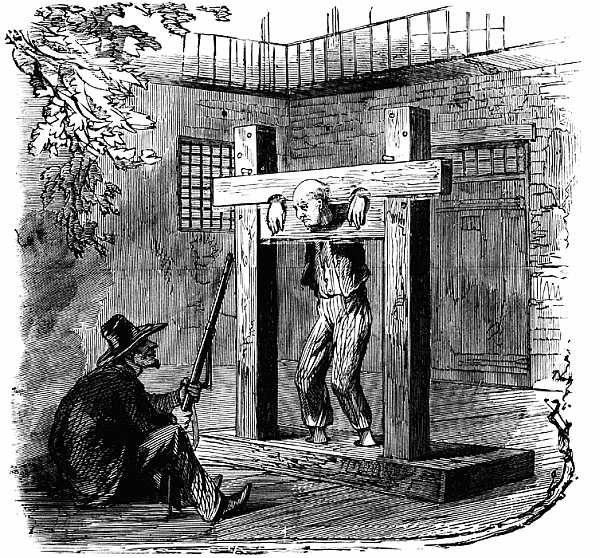
« Older PostsNewer Posts »

Powered by WordPress