Right Wing Nut House

7/12/2009

PROSECUTING TORTURE AS A DISTRACTION FROM THE ECONOMY

Filed under: Ethics, Government, History, Homeland Security, Politics — Rick Moran @ 9:21 am

When the “Torture Memos” were released a couple of months ago, President Obama took what I thought was the correct course; acknowledge the episode in our history, condemn it, pledge that it won’t happen again, and move on into the future:

This is a time for reflection, not retribution. I respect the strong views and emotions that these issues evoke. We have been through a dark and painful chapter in our history. But at a time of great challenges and disturbing disunity, nothing will be gained by spending our time and energy laying blame for the past. Our national greatness is embedded in America’s ability to right its course in concert with our core values, and to move forward with confidence.

I still believe this is exactly the correct course of action, albeit with one caveat; investigate this “painful chapter in our history” so we can discover how this happened.

It is obvious to any rational, thinking, fair minded individual that the Bush Administration did not undertake this torture regime lightly, nor did they carry it out for self-aggrandizing purposes, nor did they believe they were in the wrong. Their motives were to protect the country - as it turns out, at too high a cost. They were not looking for political advantage. They were looking for information.

There is a dispute over whether they got anything of value from their illegal actions, but using hindsight to judge the torture regime purely on efficacious grounds is nonsense. In their view, they had to try. That was the whole point of what even they acknowledged several times was shaky legal activity.

I don’t happen to think it was that close of a call legally but others have made some cogent arguments that the Bush administration did indeed walk a fine legal line. I reject those arguments as sophistry because they are given “after the fact” as justification for actions already taken. There were enough lawyers in the Bush Justice Department who knew better and protested prior to the illegal torture that there should be little doubt that the fig leaf of legality supplied by Yoo and others was inadequate to the situation.

Surely, there must be some kind of investigation into how the Bushies arrived at the decision that what they were doing wasn’t torture despite ample evidence that it was. Their overriding argument appears to be that “it really didn’t hurt that much” because they took precautions (such as limiting the time a prisoner would be forced to undergo waterboarding) and that the pain they inflicted left few marks and healed in a matter of days.

Once the psychological barrier against torture was broken, it appears that things got out of control from there. So yes, let’s investigate. But prosecute?

Attorney General Eric H. Holder Jr. is leaning toward appointing a criminal prosecutor to investigate whether CIA personnel tortured terrorism suspects after Sept. 11, 2001, setting the stage for a conflict with administration officials who would prefer the issues remain in the past, according to three sources familiar with his thinking.

Naming a prosecutor to probe alleged abuses during the darkest period in the Bush era would run counter to President Obama’s oft-repeated desire to be “looking forward and not backwards.” Top political aides have expressed concern that such an investigation might spawn partisan debates that could overtake Obama’s ambitious legislative agenda.

The White House successfully resisted efforts by congressional Democrats to establish a “truth and reconciliation” panel. But fresh disclosures have continued to emerge about detainee mistreatment, including a secret CIA watchdog report, recently reviewed by Holder, highlighting several episodes that could be likened to torture.

Holder’s decision could come within weeks, around the same time the Justice Department releases an ethics report about Bush lawyers who drafted memos supporting harsh interrogation practices, the sources said. The legal documents spell out in sometimes painstaking detail how interrogators were allowed to subject detainees to simulated drowning, sleep deprivation, wall slamming and confinement in small, dark spaces.

Prosecutions would no doubt please some on the left who want a pound of flesh from Bush administration officials. But is the administration really that keen on reigning in Holder and preventing him from looking at this “dark chapter in our history?”

Methinks the Obama administration doth protest too much. A distraction like this is just what the doctor ordered to take people’s minds off the fact that the stim bill isn’t working, that there is a growing call from Obama’s left flank for a second stimulus measure, that his cap and trade bill is in big trouble in the senate, and that it is far from certain that his his health care plan will come out the way he wants - with a public option that will be paid for without taxing the middle class.

Rallying his base to the cause of prosecuting Bush administration officials for torture will also take their minds off how he has betrayed them on a host of issues from gay rights to his agreement to indefinite detentions of terrorists.

So might this unleashing of Holder on Bush era torture crimes be nothing more than a distraction from the woeful economy that is resisting the president’s importunings to improve? Obama wouldn’t be the first president to use the tactic and he wouldn’t be the last if that is his game.

A good old fashioned investigation with strategic leaks and the spectacle of Bushies marching into the Justice Department to testify would serve as excellent bait for the media who no doubt would go overboard in their coverage of the hated Bush administration’s torture policies.

Bread and circuses worked for the Roman pro-consuls who used the spectacles to distract a populace constantly on the verge of starvation.

Why not Obama?
7/3/2009

OBAMA THE REDEEMER

Filed under: History, Politics — Rick Moran @ 11:38 am

Savior, messiah, redeemer - conservatives use these epithets to describe President Obama in a derogatory manner (liberals occasionally get carried away and are serious about those terms when they use them.) More often, I and others on the right use the terms to poke gentle fun at liberals who are quite enamored with our president and his policies.

But looking at Obama’s foreign policy, it is hard not to wonder if this is indeed, how the president sees himself and his role as the planet’s most popular leader.

Let me be clear. Obama does not have a God complex nor does he wish to set himself up as some kind of spiritual guide. In fact, if he does indeed see his role as a redeemer of America, it would be perfectly in keeping with our history and in line with at least one school of thought among historians who see the United States as a pivot around which most of the evils of this world revolve.

Redemption has always been a powerful spiritual and religious theme in America going back to the Puritans who believed that America itself was the word made flesh - a place to redeem mankind from all of its evils. The Great Awakening swept the colonies with a fervent revivalism that sought to redeem the people and the country from having strayed from the true path.

Our unique social movements from abolitionism to temperance, to women’s rights, and especially progressive politics — all sought to employ redemptive imagery and themes to move society in the direction they believed was necessary to save us from spiritual and moral decline.

Nor is there anything new in a president wishing to be a redeemer. Ronald Reagan’s biographer Edmund Morris believed that one could explain The Gipper’s passionate desire to bring conservative principles to government while taking on the Soviet Union by examining his youthful incarnation as lifeguard along the Rock River in Illinois. Morris saw this part of Reagan’s life as a defining moment - a personae RR adopted because of the adulation and recognition he received for having saved so many lives. The experience gave him a life mission and set him off on the road to the presidency.

We could do worse than have a president who looks at America and wishes to redeem her — to force her to come to grips with a sometimes checkered past, while putting in place policies that attempt to right past wrongs.

The problem with Obama, is that we have done worse because we have a president who has crafted policies that subsume American interests to those of other nations and supra-national bodies like the OAS and UN, done in the name of this redemption (i.e., the “restoration” of respect for the US in the world and what Obama sees as the necessary rhetorical nods to past “errors”), but without any apparent understanding of America’s role as the world’s sole superpower and traditional defender of freedom.

Many on the left (and some on the right) see nothing wrong with abandoning America’s superpower status. They believe that the temptation of “empire” has caused problems both at home and abroad by threatening civil liberties at home, human rights abroad, and has saddled us with a tendency to force our will on other nations in order to prevail in international relations.

I sympathize with some of this line of thinking but realistically, we can hardly be anything else. I reject the term “empire” to describe our commitments overseas or our actions relating to thuggish states like Venezuela, Iran, and Syria. There are some very bad actors in this world and to give them the benefit of the doubt by acknowledging that their critique of America’s policies past and present have any validity is to make conflict a likelihood.

Here is where Obama’s high minded, redemptive foreign policy crashes on the shoals of reality and where trying to exercise “moral authority” by granting friend and foe alike the same legitimacy in their complaints about our past bad behavior is so dangerous. For example, accepting the mullahs version of history about the Mossedegh coup will not assuage the Iranian government’s virulent and paranoid anti-Americanism. Two American presidents have already apologized for it and yet, the mullahs still insist that this 50 year old event is the proximate cause for Iran’s suffering.

Obama’s redemptive approach does not allow for the aggrieved party being wrong - about anything. Because of our past actions, any old lie, half truth, or outright exaggeration they wish to use is legitimized because the president has validated some of their grievances. “Give an inch and they take a mile” has been the reaction in unfriendly capitols to Obama’s carefully crafted rhetoric to date.

The same holds true in his reaction to the Honduran ousting of Zeyala where past US misdeeds in Latin America give Chavez, Castro, and their acolytes a ready made hammer to pound on the US because of our support of the banana republic dictators and clumsy interventions over the years. The problem is, their critiques - that Obama is ostensibly using not to support the restoration of democracy in Honduras - are laughably one dimensional and mostly without merit. But the president’s childlike belief that if he agrees with these thugs enough, they will agree to talk about substantive issues of mutual concern, may actually be making it harder in the long term to come to an agreement that would be favorable to US interests.

If we saw any softening at all in these government’s reactions to Obama’s attempt to redeem us in the eyes of the world, I might be inclined to praise the president’s courage and foresight. But the world has never worked the way the president is wishing it would and he is placing US interests in danger as a result.

In essence, if Obama wishes his redemptive approach to foreign policy to be a success, he must, by definition, abandon at least some US interests to achieve it. Perhaps an argument can be made that compromising our interests in the name of reaching a settlement with some of these thuggish regimes is a net plus. I don’t agree for the simple reason that by subsuming our own interests, we place friends and allies in danger. There is usually a reason for identifying American interests as important beyond the Chomsky school of thought that it is purely economic determinism that drives our foreign policy. Moral considerations as well as our traditional support for a stable world order play a much larger role in identifying American interests.

But Obama, who promised us “smart power” and “soft power” is giving us “no power.” In situations like Iran and Honduras, we are paralyzed - beholden to the president’s vision of redeeming America in the eyes of the world even if it means (perhaps especially if it means) ignoring our own interests.

This is a recipe for disaster. When a real crisis hits and the world, as it always does, looks to America, Obama will have boxed himself in and limited his options by insisting on America acting as any other nation even if doing so makes the situation worse. I am not a psychologist so I will not speculate if Obama is afraid of power or is ideologically inclined not to use it. But there will come a time when Obama will be forced to assert American power and risk the disapprobation of the world or watch as a vital interest of the US is threatened.

6/25/2009

CUSTER’S BAD REP DESERVED — SORT OF

Filed under: History — Rick Moran @ 9:27 am

1-15

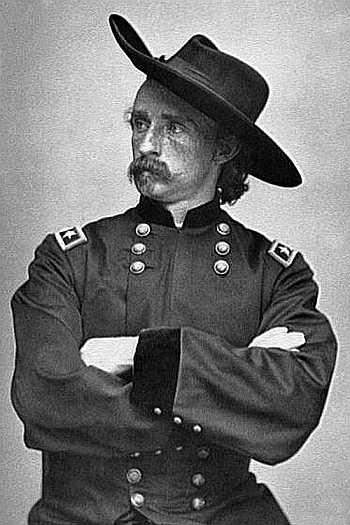
I take a break today from the depressing nature of our domestic politics and the mayhem in Iran to remember one of my favorite historical figures, George Armstrong Custer.

Custer lost his life 133 years ago today in what the Lakota Indians refer to as “The Battle of Greasy Grass Creek” and many of the rest of us remember as “The Battle of Little Big Horn.” He died as he had lived. All of his personality traits that make him such a compelling, maddening, likable, villainous, enigma-like figure in our history books were on display that day.

Custer is one of my favorites not because of his goodness or greatness but because he is one of the most fascinating personalities I have met in my exploration of American history. For every one of his virtues - and there are many - there is a corresponding trait that negates any admiration we might have for him. I can’t think of any other historical figure in my experience where this is true.

Certainly Franklin and Jefferson had many faults, both living life as hypocrites to some extent. Some giants in our history books were quite unattractive human beings despite their accomplishments. But nowhere will you find such a riotous mix of admirable and disreputable attributes being displayed by a single human being than you will if you get to know George Custer.

His Civil War record as a cavalry officer is considered brilliant. He developed extremely aggressive tactics that turned his troopers into shock troops that probed the enemy lines with razor sharp effectiveness and then, unleashed them in wild charges that usually broke and scattered his foes. General Phil Sheridan trusted him implicitly and used Custer’s command to great effect in the Valley Campaign of 1864 that eventually destroyed Confederate General Jubal Early’s threatening attacks on Washington, D.C.

At the same time, Custer was considered rash, insubordinate, uncaring of the lives of his men, a martinet who demanded spit and polish, and an officer who held most of his fellow commanders in contempt. He eagerly took to heart General Grant’s orders to Sheridan that the Shenandoah Valley, that was supplying Lee’s army at Petersburg, be denuded of food and fodder “so that crows flying over it for the balance of the season will have to carry their provender with them.”

Not surprisingly, Custer engendered a schizophrenic reaction in the men under his command. Many worshiped him. Several would have killed him if given the chance. Playing a role in his demise 133 years ago today was the disdain felt by some of his officers in the Seventh Cavalry. Although his two underlings, Captains Reno and Benteen, could probably hear the running battle in which Custer was engaged just north of the Indian village and where he and 210 of his command lost their lives, there was apparently no discussion about coming to his assistance. (There was some testimony at Reno’s Court of Inquiry in 1879 that he was drunk during the battle, a not uncommon occurrence in the cavalry among officers. Reno was cleared of the charges but pointedly, the Board refused to offer any praise for his conduct.)

Perhaps the ugliest part of Custer was his disdain, even hate for the Indians. Both played a role in his death as he suicidally underestimated the fighting qualities of his foe while proving in previous skirmishes his eagerness to kill as many Native Americans - men, women children, old folks - as he could. Like Little Big Horn, there are still historical arguments raging about his attack on the village of the Cheyenne chief Black Kettle on the Washita River in 1868 (who the Cheyenne claim was flying an American flag as a signal that he wanted peace.) Custer reported killing more than 100 warriors while the Cheyenne themselves claim many of the dead were women and children. The question of the battle being a “massacre” is also controversial as Custer took several dozen women and children prisoner and he claims the women that were killed took up weapons against his men.

(Note: Unlike Little Big Horn, no archeological excavations are possible in this battle because no one is sure of its exact location. Hence, one must grant equal legitimacy to the account given by both sides - especially given the accuracy of oral histories of the Lakota and Cheyenne about LBH.)

In short, Custer brought out the exact same feelings of admiration and disgust then that we who study him today experience from reading about him in biographies and other histories. And it is hard at this distance to judge him in terms of his morality. He was a man of his times, an army officer who had on more than one occasion witnessed the gruesome ways in which troopers were disfigured post mortem by the Indians - a fate that befell him and his men following their deaths at Little Big Horn. At the same time, his racist attitudes toward Native Americans - friend and foe - pegged him as as much of an Indian hater as his patron and commanding officer Phil Sheridan (”The only good Indians I ever saw were dead.”).

But trying to paint Custer as a genocidal maniac is nonsense. Disdainful, yes. Paternalistic and condescending, believing the Indians were better off out of the way, uncaring of their culture and community - all of this is true. But like most Americans of the 19th century, he actually gave little thought to the ultimate fate of Native Americans beyond a date in some distant future where they would be just like any other American - Christianized farmers at peace with the White man; separate but equal. This was also the view of most of the “good White men” who sought to make the reservations to which they were herding Indians into laboratories to turn these hunter-gatherer societies into agricultural communities.

From afar, we can fault them for their callous disregard of Native American culture. And surely, if the number of Whites who really did wish to see all Indians dead was small, there was a much greater number who wished to commit a cultural genocide just as ruinous to the Indian as if they had all been killed. To my mind, this is the real tragedy in this Clash of Cultures - a tragedy that has played out hundreds, perhaps thousands of times in human history when, as Jared Diamond points out, a culture with superior organization, more lethal germs, and a more advanced technology met up with hunter-gatherer societies. The result was never pretty and always ended up the way our own clash with Native American culture eventually played out.

No excuses for Custer then, but perhaps an explanation - a context that is usually missing from the one-dimensional portrayals (good and bad) that dot our public libraries. The number of myths about Custer’s dark motivations are now as many as myths about his image as a hero on horseback.There is no evidence Custer was angling for the presidency (he could barely speak two sentences in public without fleeing the stage in terror). There are some indications that after this campaign he was going to retire with his beloved wife Libby and move to Philadelphia.

It is not true he hoped to strike it rich in the Black Hills, although he used the expedition for his personal aggrandizement. Nor, as my brother Jim points out in the comments (#4) to this post I did a few years ago about the Battle of Little Big Horn itself, was Custer disobeying General Terry’s orders by attacking the Indian village nor was his plan of attack “reckless” or unrealistic, although as previously mentioned, he wildly underestimated both the number of warriors he would be facing as well as their fighting capabilities when confronted with protecting their women and children.

The battle itself is the most written about military event in American history, surpassing even the Battle of Gettysburg. And more biographies have been written of Custer than all but a handful of Americans. Perhaps our fascination with Custer rests on a combination of our romanticized image of the Indian coupled with the equally facile way in which we immortalize the US cavalry during this period in American history. Rouseau’s noble savage and the heroic manner in which we believe the west was “opened” to white settlement are an incendiary mix that causes Custer to explode in our imaginations as the perfect embodiment of American civilization; moving mountains, carving trails out of the wasteland, hacking a civilization out of the wilderness. These are powerful images and when you place Custer in that idealized portrait, he becomes larger than life.

Custer is us - as we are today and as we used to be. The good, the bad, the whole smash of American traits that makes our history so fascinating. They will be writing about him, the battle that claimed his life, and the people he sought to displace long after the rest of us have passed on.

6/24/2009

PUT NEGOTIATIONS WITH IRAN ON HOLD

Filed under: History, Iran, Politics — Rick Moran @ 11:25 am

There is no love lost between Obama and this site as anyone who has perused my posts for more than 5 minutes can attest. But the president’s response to the Iran crisis - at least on one one level - has been the correct one, in my opinion. He has been cautious, realistic, firm, and taken a tone that is non-confrontational while still offering as much support and sympathy for the Iranians in the streets that, under the circumstances, anyone should expect.

On another level, however, he has failed. By not pausing in trying to achieve rapproachment with the regime and making it clear that our policy is affected by the way they are treating the protestors, the president is giving the Iranian government a free ride. Enough with this stupid “Weenie Diplomacy” and assurances that the outreach will continue as if nothing happened. I am a realist but this smacks of stubbornness on Obama’s part and not the kind of hard headedness that is needed if the president is going to successfully engage Iran and get them to alter their nuclear program and end the threat of war.

The Iranian economy is in shambles. They also feel threatened by the United States (as well they should). They desperately need membership in the WTO and the IMF in order to have access to loans that will allow them to rebuild their crumbling oil industry and have money to invest in 21st century industries.

They also need the UN sanctions - paltry as they are - lifted. In short, there are practical, real world incentives for the Iranians to make a move toward the west. The Khatami-Mousavi faction represents this realism in the regime. It’s not a question of them being “moderate.” Both those men still refuse to recognize Israel’s right to exist and believe the US to be the “Great Satan.” Nor do they particularly love “freedom” as we understand the word. They wish to reform an oppressive system not do away with it. However, they seem to be less ideological, more flexible than the Khamenei-Ahmadinejad faction and on that, the president can pin his hopes for negotiations.

But the fascists (I will not dignify their beliefs by referring to them as “conservatives”) hold the upper hand and have powerful instruments of repression on their side - the Rev Guards and Basij. And as long as the Supreme Leader is on their side, the reformers will make little progress. Eventually, there may be a “Grand Bargain” of some kind where the reformers are absorbed in some small way into the system. I doubt that Mousavi will be one of those invited in - he appears to have burned his bridges in that respect. But the bargain will be one of convenience and won’t last.

Obama is absolutely correct that he has no power to influence this internal Iranian debate and his rhetoric has reflected that reality. But he is incorrect in thinking that this means he should allow the Iranians to believe that nothing they do on the streets to their own people will deflect him from seeking some kind of deal. It seems to me that this stance would breed nothing but contempt for America from someone like Ahmadinejad or Khamenei. And having your negotiating partner holding you in contempt is not the best way to get any kind of deal that we could live with.

As for those who are criticizing Obama for his measured rhetoric on Iran, I have to ask the question: Suppose Obama were to do as you ask and use the most violent rhetoric to condemn the regime? Then what? Where do we go from there?

It certainly would feel good to give a few verbal pops in the mouth to Ahmadinejad and his crew, but when the dust settles, where are we? Are we any closer to stopping Iran from building a bomb without risking a ruinous war in the Middle East? Is Israel safer? Is Iraq better off?

Unfortunately, the advocates of tough talk are also advocates of bombing Iran, with all the catastrophic fall out that such a policy would entail. It may yet come to war with Iran. I am enough of a realist to see how Iran possessing the bomb would be, in John McCain’s words, “the only thing worse than war.” But to not do everything in our power to resolve the situation without armed conflict would be the folly of our times, much worse than the idiots who blundered into starting World War I or the appeasers who allowed Hitler to start World War II.

The cavalier way in which many talk of “hitting” Iran makes my blood run cold. Rejecting negotiations outright just doesn’t make sense to me in this situation. There are too many unknowns to be confident that bombing Iran wouldn’t make things worse. And if that would be the case, why bother? Only in the last extremity - ironclad proof that Iran has a weapon or is enriching uranium to the 85-90% level to build one - should we consider war.

Obama’s outreach to Iran will almost certainly fail as long as the fascists are in power. They are too ideological, too paranoid to change. But who knows what the future will bring? What kind of shape will the Iranian economy be in a year from now? Who will be in charge? Will it come to a point that Iran actually needs the west to stave off disaster?

This is why Obama’s rhetoric on today’s crisis may be sound, but the idea that he is not demonstrating that the regime’s treatment of their own citizens has any consequences at all is wrongheaded. Successful negotiations require that both parties respect each other. Given Obama’s actions, it is hard to believe that carrying on a “business as usual” stance with the regime will engender anything but contempt for the US from its leaders.

6/21/2009

A CONVERSATION WITH MY DEAD FATHER

Filed under: Blogging, Government, History, The Rick Moran Show — Rick Moran @ 10:30 am

Another oldie but goodie. This may be the most personal post I ever wrote for this site.

Originally published on June 16, 2007.

********************************

It’s Fathers Day again. Another timely reminder that you’ve been in the ground 25 years and I’m still here. Not only that, I get to sit and listen to everyone talking about their fathers - what they’re going to be doing with them, what present they got them. Not that I’m resentful, mind you. It’s just sometimes very hard to take when I see the rest of the world getting to enjoy the company of their fathers and here I am stuck with this imaginary conversation. I guess in 53 years if you haven’t learned that life isn’t fair (something you said many times) then you are destined to be unhappy and discontented. So I suppose I’ll have to make do with this little literary phantasm.

Would that it weren’t so.

So anyway…here I am. What do you think? Yeah, put on a few pounds. Come to think of it, I’m starting to look a lot like you when you were this age. I suppose that’s the destiny of all sons. I see fathers and their older sons together today and the resemblance is there for sure. Is it nature’s way of reminding us where we came from? If you could see your seven sons lined up in a row, most of us would remind you of yourself in some way. I hope that would give you some satisfaction.

As for the rest… Well? I’m waiting. Cat got your tongue? Okay, let me start.

I’ll admit I’ve been a bit of a disappointment. Whatever it is you wanted for me in life (outside of the ubiquitous “be happy”) never quite materialized. I had my chances. But things got kind of…complicated along the way. Moreso than the others, the skein of my life has run pretty much against the grain. Wherever success or happiness lurked, I always seemed to find a way to pass them by. A career lost, a bad marriage, and the “Irish sickness” - 25 years can pass pretty quickly when there are large parts you don’t remember.

But things are better now as you can see. Amazing what a good woman can do for you, eh? And you should know. You had the best. We like to deny it but women are right when they say we’re all like little boys. There’s a part of us that wants to be cared for, that needs the nurturing love that only a woman can give. Oh, we make a big deal of resisting it - especially these days when we worry such thoughts are considered “incorrect.” But then you reach a certain age and you just don’t give a damn what others say. You know what you can give her and what she can give you and you base your relationship on the beauty of the symbiotic nature of love; a mystical beholdeness to each other that goes beyond the physical and enters the realm of the poets - a spiritual linking of minds and hearts that is truly the only valuable you own.

You know all of this, of course. I’m not telling you anything you didn’t experience yourself. But you were lucky enough to find it early in your life. I guess better late than never for me.

I wonder what you would think of my new career - if you can call writing a career. You always thought that writing was a calling, almost like the priesthood. It’s as fulfilling as anything I’ve ever done and too much fun to be called work. Sometimes, I get a chuckle imagining you reading some of the stuff I write. As an FDR liberal, I can just see your head shaking at some of my more conservative diatribes. No matter. You would have critiqued my stuff not for the political content but rather the stylistic aspects of a particular piece and cogency of my arguments. I bet you would have kept me on my toes.

But of course, despite your classically liberal politics, I have you to thank for my conservative ideological bent. All those children and I was the only one who ended up on the right side of the fence. And you had me pegged as a righty almost before I myself realized it when you suggested I read Russell Kirk’s The Conservative Mind shortly after I graduated from college. You knew exactly what would happen, didn’t you? Kirk’s references to Edmund Burke and other classical thinkers sent me off on an intellectual quest to find myself. I discovered that I agreed with the ideas espoused by conservative giants like Hayek, Eliot, Strauss, and Kristol. But you knew that. And you also knew that the love of learning and books that you instilled in all of us would carry me to my own “undiscovered country” of new ideas and different politics.

I bet that gave you a secret thrill, though. The idea that one of your brood would break with your politics validated your ideas on how to raise children; give them the freedom to discover the world on their own, guiding them where necessary but never dictating what they should think. Your library had books from every conceivable ideological point of view. From Karl Marx to Nietzsche, to Bishop Sheen. Each of us arrived at our politics in our own way, taking our own journeys of self exploration. And we were never lacking for encouragement or advice from you.

It’s amazing how much I think of you even though you’ve been gone these many years. I have Sir George Solti conducting the Chicago Symphony in Mahler’s 1st on one of my Rhapsody playlists and every time it comes on, it brings back a flood of memories of attending the Symphony with you and mother - after spending the afternoon in South Bend watching a Notre Dame football game. I can smell the leaves burning, the memory of those fall days are so powerful.

There are other reminders too - much too private and personal to put in this article. But ultimately, it comes down to this; you’ve never left me. If there is one thing I could say to comfort you wherever you are it is that despite the fact you have been gone almost half my life, your presence still fills my mind. The memories are important. But beyond memory, beyond the fading images on crumpled photographs, beyond the bleary, misty visage I see when I close my eyes, there is you. In my heart and soul. Until I draw my last breath on this earth.

And that, my dear daddy, is a comfort to me.

6/19/2009

LIVEBLOGGING KHAMENEI’S SPEECH AFTER FRIDAY PRAYERS (UPDATED)

Filed under: General, History, The Rick Moran Show — Tags: — Rick Moran @ 3:38 am

I started watching here in the middle of it.

4:38 AM: So far he has blamed “terrorists” who are present in the huge crowds for the violence.

The crowd sounds like it wants blood. . Chanting “Down with opponents of the revolution.”

4:40 AM: He is issuing a direct warning to the protestors. It is their fault if the protests turn violent and they will suffer the consequences.

4:42 AM - Criticizing west for putting out false election results. Khamenei acknowledges “new situation” in Iran.

4:45 AM: The West - “removed their masks” after election. Made some comments that revealed their true nature. Criticizing Obama for encouraging street protests.

4:46 AM: Protest violence carried out by western agents? That’s what the translator seems to be saying.

4:47 AM: Ah, memory. “Death to America” chant by crowd. Khamenei IS blaming “intelligence services” for violence.

4:48 AM: Strong criticism of US for Afghan, Iraq wars and support for Israel.

4:49 AM - OH MY GOD. Khamenei brings up Branch Davidian crackdown - “do they know anything about human rights?”

4:50 AM: Addressing the 12th Imam. “We are doing what we are obliged to do.”

4:52 AM: ” I am ready to put all on the line for the revolution. The revolution belongs to you (12th Imam). We will continue the path with full force. We ask you to support us with your prayers along the way.”

4:53 AM: Speech ends with crowd chanting that they would be willing to give their lives for the revolution.

Wrap up by pro-regime English speaking reporter fills in some of the blanks. He thinks it was a good speech, a “sensitive” speech. If that’s the guy’s idea of “sensitive” I’d hate to be married to him.

Khamenei insists on going through channels - the Guardian Council - to protest election.

Khamenei feels for shopkeepers and others who suffered property damage as a result of the protests.

The election “showed the people’s trust in the Islamic system.

Praised Rafsanjani but criticized him for siding with Mousavi.

Summary: Not as bombastic a speech that one would expect if a Tianemann style massacre was in the works. Khamenei seemed at one point to heavily criticize the Basij for attacking students in their dormitories (Allah has video of the attacks.) But clearly, he has called for an end to the street demonstrations and has ordered Mousavi to get with the program - after he and the other candidates meet with the Guardian Council tomorrow.

He laid the groundwork for a crackdown but stopped short of threatening one outright. He may have put a roadblock in front of the Basij - or it could be hypocrisy on his part. In short, we don’t know much more now then we knew before the speech.

UPDATE

The Guardian confirms what I thought I heard from the translator above and fills in some of the early parts of the speech I missed.

They take a much dimmer view of the possibility of a crackdown. They believe Khamenei’s warnings were clear and pointed. We’ll see. I think Allah is right and he will wait until after tomorrow’s sham meeting between the candidates and the Guardian Council about election complaints.

6/9/2009

THE RICK MORAN SHOW: OBAMA’S CAIRO ADDRESS AND ELECTIONS IN LEBANON AND IRAN

Filed under: History, Iran, The Rick Moran Show — Rick Moran @ 4:02 pm

You won’t want to miss tonight’s Rick Moran Show, one of the most popular conservative talk shows on Blog Talk Radio.

Tonight, I will welcome special guests Rich Baehr of the American Thinker and Tony Badran of the Foundation for the Defense of Democracy to talk about Obama’s Cairo speech, and the elections in Lebanon and Iran.

The show will air from 7:00 - 8:00 PM Central time. You can access the live stream here. A podcast will be available for streaming or download shortly after the end of the broadcast.

Click on the stream below and join in on what one wag called a “Wayne’s World for adults.”

The Chat Room will open around 15 minutes before the show opens,

Also, if you’d like to call in and put your two cents in, you can dial (718) 664-9764.

Listen to The Rick Moran Show on internet talk radio

6/6/2009

A WORD ABOUT COURAGE

Filed under: History, The Rick Moran Show — Rick Moran @ 6:06 am

1-11

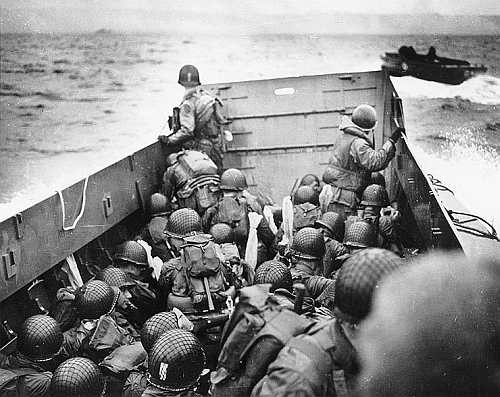
It was 62 years ago that US Rangers stormed the cliffs of Pointe Du Hoc near Omaha Beach. And as the veterans of that day grow oh so gray and bent, mere shadows of the lithe and limber youths who pulled themselves up the jagged bluffs, one hand over another, their comrades falling all about them, we are reminded that the word “courage” came alive that day.

Too often, we use that word in a base and cavalier way. A Hollywood movie star has “courage” because she revealed to the world that she’s a drug addict. A comic has “courage” because he made fun of the President of the United States to his face. A filmaker has “courage” because he made millions of dollars shooting a “documentary” which shows the US government complicit in the mass murder on 9/11.

And so instead of “courage” being a word with inexpressible significance and meaning beyond its simple definition, it has become a self congratulatory epithet, a hollowed out expression of empty promise and insincerity. Today, the purveyors of myth and shapers of opinion use the word to tell the rest of us who to admire and what to respect. No longer does courage imply sacrifice or a willingness to give all that one has for a cause greater than oneself. Instead, courage defines the selfish desires and overwrought egos of an ideology that sees more irony in the word than reverence.

All of this was in the future 62 years ago when the Rangers lived the word courage by taking the bluffs above the beach. And a short distance away at Omaha, Americans were dying, never knowing that their sacrifice was redefining the word courage for all time. For in their last bloody moments on earth, a titanic struggle was taking place between good and evil that 10,000 years from now, poets will still be singing songs and human beings will still be shaking their heads at in wonder and awestruck disbelief.

It takes genuine courage to confront evil. By its very nature, evil must defend itself by lashing out and destroying anything that attempts to get in its path, lest it perish ignominiously. Those representing good realize this which makes the confrontation between good and evil always a life threatening proposition and thus, an exercise in self-denial and sacrifice. The Rangers on the bluffs and the men in transports speeding toward bloody Omaha that terrible day 62 years ago knew full well what they were in for. They were willing to pay the price to defeat evil.

There were more than 700 war ships on the waters of Normandy that day, firepower never before seen on the open ocean. The men would be landing with tanks and guns and grenades and enough explosives to blow up a small town. But their most potent weapon by far was the courage to face their foes in open combat with the full knowledge that doing so was likely to get them killed. We ask ourselves quite properly, would I have been capable of such a feat? The answer will likely tell us much about ourselves.

Because in those last frantic minutes before hitting the beach, as grown men wept and prayed and steeled themselves for the supreme test of their young lives, they must have found something deep within themselves, something they could mentally and emotionally grasp and hold onto so real and palpable it must have been. What was it? An image of their family? A remembrance of love and closeness that wrapped itself around them and made them feel safe? Or perhaps it was the simple recognition of the here and now with a sublime faith that He that arbitrates our fate has placed me in His keeping and if these be my last moments, let them be meaningful ones.

Whatever rushed thoughts were coursing through their minds as they splashed ashore, participating in some of the most intense combat ever experienced by American fighting men, their courage allowed them to disobey the most primal of instincts to flee for safety and walk into the teeth of the enemy’s fire. And then, the supreme test. Historian Stephen Ambrose:

They were getting butchered where they were all the sea wall because the Germans had it all zeroed in with their mortars that were coming down on top of them. And, “Over here, Captain,” “Over here, Lieutenant, over here.” A sergeant looked at this situation and said, “The hell with this. If I’m going to get killed, I’m going to take some Germans with me.” And he would call out, “Follow me,” and up he would start. Hitler didn’t believe this was ever possible. Hitler was certain that the soft, effeminate children of democracy could never become soldiers. Hitler was certain that the Nazi youth would always outfight the Boy Scouts, and Hitler was wrong.

The Boy Scouts took them on D-Day. Joe Dawson led Company G. He started off with 200 men. He got to the top of the bluff with 20 men, but he got to the top. He was the first one to get there. He’s going to be introducing President Clinton tomorrow at Omaha Beach. John Spaulding was another. He was a lieutenant. Many of them are nameless. I don’t know their names. I’ve talked to men who’ve said, “I saw this lieutenant and he tossed a grenade into the embrasure of that fortification, and out came four Germans with their hands up. I thought to myself, hell, if he can do that, I can do that.” “What was his name?” I will ask. “Geez, I don’t know. I never found out his name. I never saw him before, and I never saw him again, but he was a great man. He got me up that bluff.”

“Unknown but to God” and history, I suspect. In the end, whatever gave them the inner strength to keep going in the face of such murderous opposition, it was as inspirational then as it is today.

It is fitting and proper that we remember their courage today, the young men who lived and died the word courage. But we must also question ourselves about our commitment to that memory. Does it have meaning beyond the misty eyed reminisces of old men? Can we still summon forth the will to perform great deeds in a cause that reaches far beyond our narrow little corner of planet earth in which we live and love and die?

At the moment, the answer to that last question is unknown. But I daresay the fate of the nation rests upon a positive response. For unless we are willing to propel ourselves beyond our own selfish, comfortable existence and find the strength to confront the evil that seeks to destroy us, we are more likely to end up a victim of our own hubris rather than triumphant with the knowledge that we, like the men of D-Day, brought to life the word courage and made it once again something to be lived and felt in our hearts, ever mindful of the sacrifice of those who came before us.

This post originally appeared on June 6, 2006

6/4/2009

OBAMA’S CAIRO SPEECH COULD HAVE BEEN BRAVER

Filed under: Blogging, Government, History, Politics, The Rick Moran Show — Rick Moran @ 10:06 am

I am writing an in-depth piece for Pajamas Media on the speech but I wanted to get some thoughts down while some of them were fresh in my mind.

I saw the speech this morning and just finished reading the transcript. My initial impression from watching it was, I believe, correct; it was a very good speech with some eye popping assumptions that were just plain false, a glossing over of some points that needed to be hit harder, and a troubling lack of candor about the Muslim world regarding extremism that he either believes or deliberately failed to address.

Positive parts of the speech were that he did indeed tell the Muslim world some things they needed to hear: Denial that al-Qaeda carried out the attacks of 9/11 and the reality of the Holocaust are two subjects that are absolutely essential for the Muslim world to accept before any progress can be made. I think he also said some things that we in the west needed to hear about Islam although that part of his speech will fall on deaf ears in this country. Those predisposed to believe the worst about Islam and Muslims will not change (and that goes double for the other side).

I also thought Obama gave a good defense of our invasion of Afghanistan - something we should be reminding Pakistan of every day. And while I wish he would have hit the Iranian nuclear problem much harder, he laid out the consequences of an Iranian bomb realistically and without bombast. What he can do about it is another story.

He said some nice things about religious freedom and the democratic aspirations of all people on the planet. But Bush had been saying basically the same thing for years. And as far as religious freedom, his dubious claim of tolerance for other religions by Islam either proves his naivete or he has been misinformed about Christian persecution in Islamic lands.

His suggestive rhetoric that we are “imposing” democracy on Iraq or Afghanistan was pretty strange. While the Iraqi constitution borrowed some western concepts, it is much more beholden to Arab and Islamic practices than western-style government. I don’t recall anywhere in the US Constitution where it says the Koran inspires the law as it does in the Iraqi document.

Besides, should we have “imposed” another dictatorship on the Iraqis instead? I see no evidence that we were seeking to impose our values or culture on the Iraqis either. Just where this “imposing democracy” line came from would be a mystery except that is standard leftist tripe going back to Viet Nam.

He said almost nothing about government corruption (”stealing from the people”) when most citizens in the Middle East view the issue as one of the major problems in their countries. And he was virtually silent about separation of church from state. This was understandable but a truly brave speech would have addressed the issue head on. Islam is not incompatible with modernity but when governments use its traditions and teachings to control the people, impede economic development, stifle free speech, and maintain power, it becomes a dead weight on realizing progress toward a free, open, and prosperous society.

Stylistically, I thought the speech was near brilliant. It was extremely well organized, and the segues from topic to topic were rhetorically smooth and logical. It was both easy to follow if you were watching and easy to read.

The rhetoric was flowery without being obnoxious. Obama’s speeches have a tendency to take rhetorical flight and have trouble coming in for a landing sometimes. He avoided that pitfall by carefully crafting imagery that was substantive and somewhat subdued. The tone was at times hectoring - almost like a teacher scolding a class. But there was much beauty in the language and he mostly succeeded in walking the line between preaching and conversation.

There were many specific passages that will be taken out of context to attack the speech - many of them justified in my opinion. His belief that no one country should dominate in this brave new world is nonsense - unless he intends to deliberately subsume American interests to please other countries and the United Nations. You can bet the Russians and the Chinese were laughing at that passage. They have no intention of not acting in their vital interests - even if the world condemns them for it - as they seek to match or supplant America as the dominant power on the planet.

Was it a great speech? I subscribe to Theodore H. White’s view of what makes a great speech where three elements have to be present for a political speech to achieve immortality. First, the moment in time must amplify the words spoken. Since Obama’s Cairo address had no dramatic event or backdrop, that alone would disqualify it from being considered with even the top 100 American speeches much less being analogous to several of Churchill’s ringing addresses.

But the other factors that White believed made a great speech - the place the address is given and the words themselves, which should be great both spoken and read - came close to being fulfilled with Obama’s address. Martin Luther King speaking when he did and where he did acted as a gigantic megaphone for his words. Certainly Obama’s address will receive wide play around the world and the fact that he delivered it in a Muslim country will amplify the message . And the words in the speech itself will be seen in a context that guarantees the address will live beyond the daily news cycle.

In short, a good speech that could have been braver.

UPDATE

There’s a lot of good commentary both right and left. Ignore the politically motivated on both sides and concentrate on independent analysis.

On the right, Ed Morrissey and Christopher Preble of Cato have reasoned analysis. On the left, Peter Daou has an interesting critique. But the reality is, most on the right are trashing it and most on the left either believe it the second coming of the Sermon on the Mount or take great delight in linking to righties trashing the speech.

6/3/2009

CONOR FRIEDERSDORF AND HIS ABOMINABLE STRAWMEN

Filed under: Blogging, Ethics, Government, History, Politics, The Rick Moran Show, War on Terror — Rick Moran @ 10:24 am

1-1
Conor Friedersdorf receiving some words of wisdom from one of his many strawmen.

A few days ago when the Levin/Dreher/Friedersdorf war was waging at various points around the internet, I wanted to weigh in on it to defend Conor Friedersdorf from charges by some that he was just some youthful lightweight whose attacks on Levin for suggesting a woman’s husband put a gun to his head for being married to such a dolt were misguided and ignorant of the “context” found on conservative talk radio.

After reading this piece at The American Scene by Mr. Friedersdorf, I’m glad I didn’t.

I have given up trying to understand why conservatives place such importance on what comes out of the mouths of pop righties like Levin whose shtick, while entertaining, is taken far too seriously by way too many. Fine. Color me a old fuddy duddy but it used to be conservatives were perfectly able to find inspiration and guidance from genuine thinkers or even thoughtful politicians. I suppose every mass movement needs its popularizers and celebrities these days (I recall the guff astronomer Carl Sagan endured from his colleagues for trying to make extraordinarily complex concepts accessible to minds less scientifically inclined - like mine). But really now, must we elevate to hero status people whose claim to fame is that they can savage the opposition in more colorful and amusing ways than some other shock jock?

Yes, yes, I know that Rush, Levin, and the rest do more than simply make liberals look like idiots, and even dangerous idiots at times. They also dispense conservative wisdom - or, at least what their adoring fans believe is wisdom. Mark me down as unimpressed with most of these shock jocks forays into the realm of conservative ideas. Listening to Limbaugh sometimes reminds me of my best friend John when I was in high school who didn’t read Moby Dick, or The Red Badge of Courage, or any of the classics assigned in literature class but instead bought the comic book version, usually on the morning of the test. Needless to say, he passed the exam but lost out on the richness of Melville’s prose and Crane’s towering anger at the waste of war.

I like a good verbal slap at liberals as much as the next conservative but why must it degenerate into the kind of crude vulgarities used by Levin et al? In the race for ratings, the more inventive the invective, the more friendly that Arbitron meter becomes, I guess.

At any rate, I agreed with Friedersdorf that Levin stepped over the line and should have been smacked down for it. But when a young man like Friedersdorf comes up with a shockingly ill conceived post like this one on “terror hawks” and how Obama could use the same excuses used by Bush to start going after anti-abortion activists, I am glad my support for his arguments against Levin was never put in a post.

This piece has a double dose of straw men, a generous dollop of reductio ad absurdom argumentation, with a heaping pile of manure for desert.

First, what’s with this?

The attack on Dr. Tiller is widely referred to as “terrorism” in the blogosphere. Agree or not, it is easy to image an ongoing terrorist campaign run by fringe pro-lifers to shut down abortion clinics. Heaven forbid that this recent murder is followed by bombings at a few Planned Parenthood locations, but that scenario isn’t unthinkable — copycat atrocities are a sad fact of modern life.

“Easy to image” an “ongoing terrorist campaign” carried out by fanatical pro lifers in a scenario that “isn’t unthinkable? No, it’s not easy to imagine and barely thinkable (Dismissing the possibility entirely cannot be done but “easy to imagine” it is not.) In fact, one would have to deliberately ignore history to imagine anything of the sort. Such acts of murder by unbalanced fanatics have been blessedly rare and have never come in the kind of terrorist wave attack Friedersdorf posits above. The self evident reason is that abortion providers are on high alert after such a terrorist act as are clinics, making further atrocities nearly impossible.

But someone must have put a burr up Mr. Friedersdorf’s behind for him to go off like this:

Should something like that come to pass, I wonder how “War on Terror hawks” would react. My admittedly flawed term is meant to reference folks who believe the executive branch possesses broad unchecked powers to combat terrorism, including the designation of American citizens as enemy combatants, the indefinite detention of terror suspects, wiretapping phones without warrants, “enhanced interrogation techniques,” and other powers initially claimed by the Bush Administration and its defenders. Would these predominantly conservative officials, commentators and writers be comfortable if President Obama declared two or three extremist pro-lifers as “enemy combatants”? Should Pres. Obama have the prerogative to order the waterboarding of these uncharged, untried detainees? Should he be able to listen in on phone conversations originating from evangelical churches where suspected abortion extremists hang out? The answer is probably that different “War on Terror hawks” — anyone have a better term for this? — would react differently, but as a matter of law, it seems to me that if they’d gotten their way during the Bush Administration, President Obama would have the power to take all those steps and more, a prospect that is terrifying to me, not because I think our Commander in Chief is looking for a pretext to round up innocent pro-lifers, but because it doesn’t take many violent attacks before Americans start clamoring for a strong executive response, a dynamic that tends to erode liberties in previously unthinkable ways and spawn mistakes whereby innocents are made to suffer.

First of all, take a breath, my friend. My eyes are turning red just from reading that last sentence.

I must congratulate Mr. Friedersdorf on setting up such a fine strawman. Obama holding pro-life activists as “enemy combatants” sure is dramatic but really now, the odds of that happening fall somewhere between my becoming starting right fielder for the Chicago Cubs and the moon careening out of orbit and hitting the earth before I finish writing this sentence. Still here? Good.

So the idea that “terror hawk” commentators would be faced with such a question has as much chance of occurring as me being elected Governor of Illinois - especially since I am a nominal Republican and, while I wouldn’t mind a little harmless graft now and again, the crooks and rogues who inhabit the sewer of Illinois politics are major leaguers compared to anyone else.

It is a ridiculous argument to make, this idea that any president would come down on anti-abortion fanatics like that. Ditto waterboarding pro life activists (Why??). And Mr. Friedersdorf is naive indeed if he doesn’t believe the FBI isn’t already listening in on what these activists are up to - even if the connection leads to a church. The Bureau no doubt has a handle on most, if not all of the fanatics and probably have a good idea which ones are a threat and which are mostly talk.

Friedersdorf is also probably off base with his contention that a wave of terrorist attacks on clinics would cause an outcry by Americans for a “strong executive response.” No doubt pro-choice activists would quite understandably be yelping for the civil liberties of activists but would the average American, who would be in little danger from such attacks, make the kind of stink about internal security that our politicians made in the aftermath of 9/11?

Mr. Friedersdorf’s arguments are based on the notion that there is equivalence between a terrorist attack carried out by trained cadres hell bent on killing as many of us as possible and, historically speaking, lone wackos or small groups of untrained fanatics attacking small targets that — again, historically - have resulted in a small loss of life. I don’t see the equivalence or much need to worry that Obama or any president - even if Mr. Friedersorf’s terror wave scenario came true - would carry out the draconian measures that President Bush felt necessary to impose in the aftermath of 9/11.

I would be in agreement with Conor if he had stuck to the notion that another terrorist attack that was equally or more devastating than 9/11 would almost certainly lead to additional curtailments of our liberties. I hate to contemplate the notion of what the aftermath of a WMD attack would entail and what impact it would have on our freedoms. But Friedersdorf is trying to make a point about the danger of right wing religious nuts being equal to that of the jihadists - not only as a threat but that tactics used to fight the jihadists would be used to violate the civil liberties of anti-abortion fanatics That dog don’t hunt.

One point Conor makes I agree with; supporting torture techniques like waterboarding is wrong. As for the rest, I have been troubled by some of the Bush-era policies like FISA violations and and some of the more eyebrow raising strictures in the Patriot Act like removing safeguards on FBI warrants. But I am also not a civil liberties absolutist and recognize that the exigencies of war sometimes calls for a curtailment of some liberty. That has historically been the case and to have denied the president the same powers granted every president since Washington would have been wrong.

If I were Conor Friedersdorf, I would pick another analogy to make his point about “terror hawks” than the fringe fanatics of the anti-abortion movement.

« Older PostsNewer Posts »

Powered by WordPress